


 Share on media


Introduction
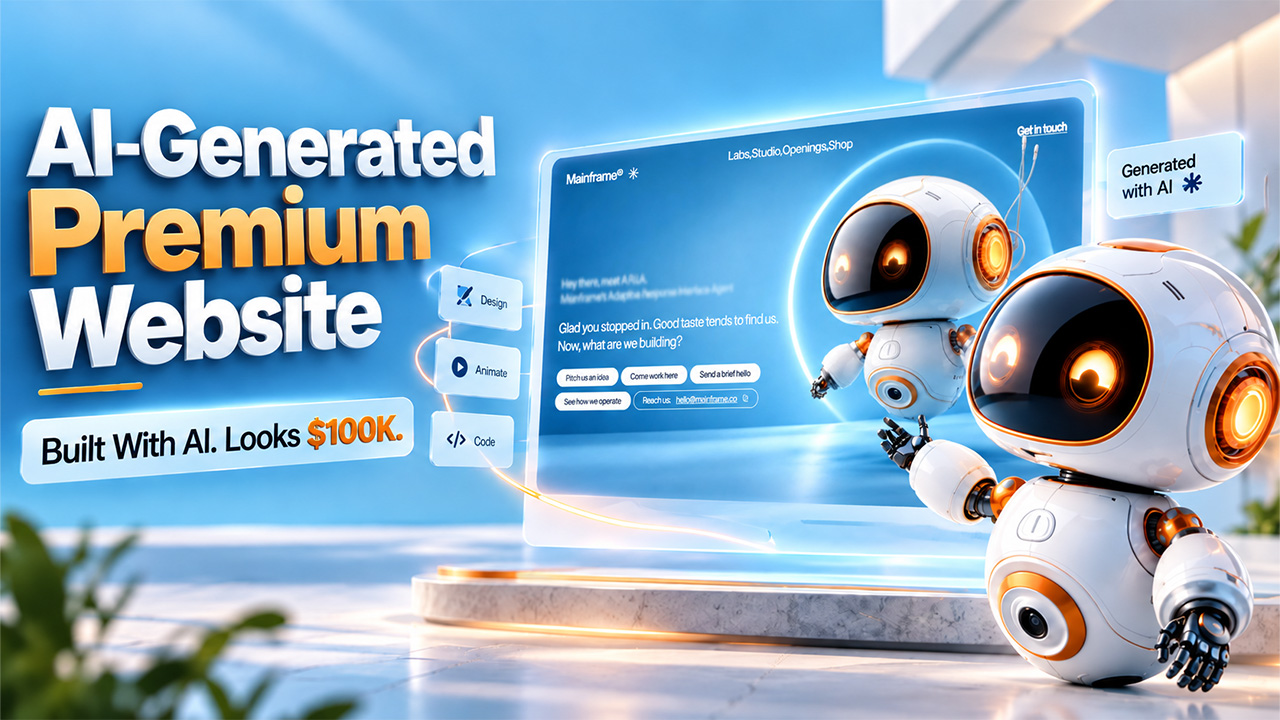
Building a high-end and premium website often comes with a great price tag, typically into the range of 1 million or more when recruiting animators, designers, and developers. However, what happens when a creator tries to emulate the same premium appearance using only AI platforms? Our team decided to find out, recording the complete process of designing, animating, and coding a modern 3D website from basics using AI.
What Is an AI-Generated Premium Website?
An AI-generated premium website refers to a website entirely created with the help of AI tools, from creation of characters and visual design to final code generation and animation without depending on development team or traditional design. The objective of this experiment was to see whether AI can replicate creativity, polish, and functionality typically associated with custom-built and costly websites.
The Process: The Journey from Idea to Live Website
Looking for Right Inspiration
Our team started by browsing Pinterest for future-ready website designs and 3D visual references, avoiding generic layouts deliberately with simple cards and standard gradients. After exploring several styles — including futuristic interfaces, 3D characters, robots, and AI-themed visuals — a striking 3D robot design stood out as the perfect centerpiece for a hero section.
AI-driven Visual Recreation
Instead of directly asking for the original reference image, we uploaded it to ChatGPT and asked for a reimagined version in a wide 16:9 composition. As a result, you get a white-bodied robot with orange metallic accents, futuristic visor, and glowing eyes, perfectly aligned with the intended visual direction.
Generating Animation-ready Keyframes
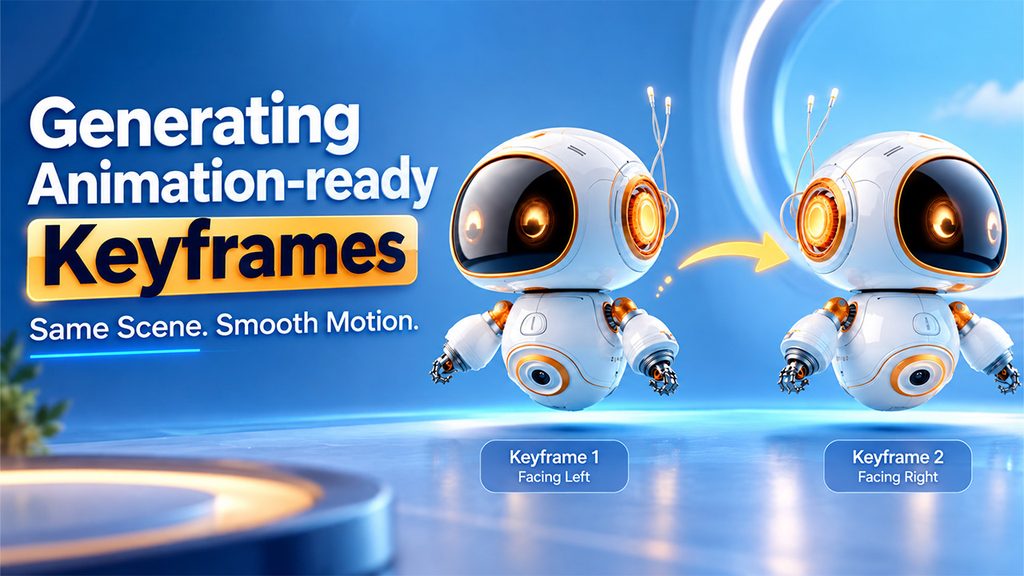
To bring the robot to life, two consistent keyframes were created:
- One frame showing the robot facing left
- A second frame showing the same robot facing right
Consistency was key — the same robot, environment, lighting, and position were maintained across both frames, with only the head direction changing.
Animating with Adobe Firefly
The two keyframes were uploaded to Adobe Firefly using its Omni model. A motion prompt instructed the AI to smoothly transition the robot from looking left to looking right, while keeping the camera locked and avoiding unnecessary movement. The output was a smooth and professional-looking animation ideal for a hero section.
Building the Website with Claude AI
With the animation ready, we turned to Claude AI to build the actual website. Instead of manually mentioning each design detail, a comprehensive prompt was utilized in describing a futuristic and premium AI website with an effective hero section, 3D elements, modern typography, seamless animations, and professional and clean layout. Claude generated the full interface based on this direction.
Replacing the Hero Visual
The default hero visual created by the AI was not the desired one, so we changed it out for the custom robot animation. This single modification ensured that the website gave a noticeably cohesive and polished feel.
Running the website locally
After downloading the generated project files, we:
- Installed Node.js.
- Opened the project folder in a code editor.
- Ran npm install to install dependencies.
- Ran npm run dev to launch the website locally.
The result was a fully functional, animated, AI-built website — created entirely through a combination of AI tools rather than traditional design and development work. Once the website is running locally, you can extend it through plugins for SEO, added functionality, and security.
Read More: You can extend the functionality of AI-generated website as you can boost a WordPress website through WordPress plugins.
Conclusion
This experiment showcases just how fast AI platforms have come in replicating the feel and look of a premium website, one that might cost $100,000 to build otherwise. By integrating AI-driven animation, AI-powered visuals, and AI-based website creation, we have shown that a creator can create a 3D, modern, and animated website from the beginning. While this is just the initial step, it showcases tremendous potential for AI to transform how websites are designed and built in the future.
Frequently Asked Questions
Can AI really build a website that looks premium?
Based on this experiment, AI tools like ChatGPT, Adobe Firefly, and Claude AI can be combined to produce a website with a polished, professional look, including custom visuals, animations, and functional code.
What AI tools were used in this process?
The process combines ChatGPT for image recreation, Adobe Firefly (Omni model) for animation, and Claude AI for website design and code generation.
Do you require coding experience in using this method?
Standard familiarity with running commands such as npm run dev and npm install is crucial. However, the coding work and heavy design were managed by AI largely.
Is this approach a full replacement for professional web development?
Not necessarily. This was an experimental proof of concept. It shows AI’s potential to significantly reduce cost and effort, but complex and large-scale projects may still benefit from professional oversight.