


 Share on media


Choosing the right Cloud Service Provider is an important decision for any business moving its operations to the cloud. This blog explores the key factors to consider when selecting a provider, the benefits of cloud computing, and how to identify a solution that meets your business needs.
Today’s digital landscape requires businesses to use technology to work more efficiently, organize information, improve customer interactions, and stay competitive. Cloud computing helps organizations achieve these goals by providing access to software, data storage, and computing infrastructure through remote servers. Whether a company is a small startup or a large enterprise, working with the right Cloud Service Provider can make it easier to manage resources and support business growth.
However, with so many providers available, choosing the right one can be challenging for business managers. Each provider offers different tools, pricing structures, security measures, and performance levels. Evaluating these factors carefully helps businesses select a provider that can scale with their needs, support innovation, and reduce operational inefficiencies.
What is a Cloud Service Provider?
A cloud service provider is a unique company providing computing services via the internet. The computing services may range from data storage to virtual servers, databases, networking, application hosting, analytics, and artificial intelligence.
Through a reliable service provider, companies can lease computing services from a cloud provider and access the services anytime without having to own the costly physical servers. The service minimizes the cost of owning on-premises infrastructure for businesses.
When selecting the right cloud solution, businesses should also understand the role of website hosting and server infrastructure in managing and delivering their online applications.
Benefits of a Cloud Service Provider?
A cloud service provider offers businesses easy access to computing resources, storage, databases, networking, and software over the internet. Choosing the right service provider can help organizations reduce costs, improve security, scale their operations, and increase productivity.
Some of the key benefits of a cloud service provider are as follows:
- Cost Saving
Cloud computing service providers can surely save on the cost of IT infrastructure. An efficient service provider will make it possible for the business to avoid buying high-end servers, storage, and networking equipment to launch with.
- Scalability and Flexibility
From the digital marketing company, cloud services enable companies to ‘scale up or scale down’ required computing resources. It is particularly advantageous for ecommerce websites, new startups, and enterprises with seasonal fluctuations in demand.
- Improve Data Security
A trusted company has security measures, including data encryption, identity and access management, multi-factor authentication, security monitoring, and infrastructure updates. These provisions can assist enterprises safeguard sensitive data and minimize risks related to security.
Apart from implementing security controls in the cloud, organizations should utilize best website security practices to safeguard their applications, mitigate unauthorized access to websites, and lower the chances of cyberattacks.
- Data Backup and Disaster Recovery
Data loss can affect customer trust and even impact business operations. Cloud service providers provide backup, replication and disaster recovery services that enable organizations to recover crucial data following events like accidental deletion and system crashes.
Cloud Service Providers Service Model
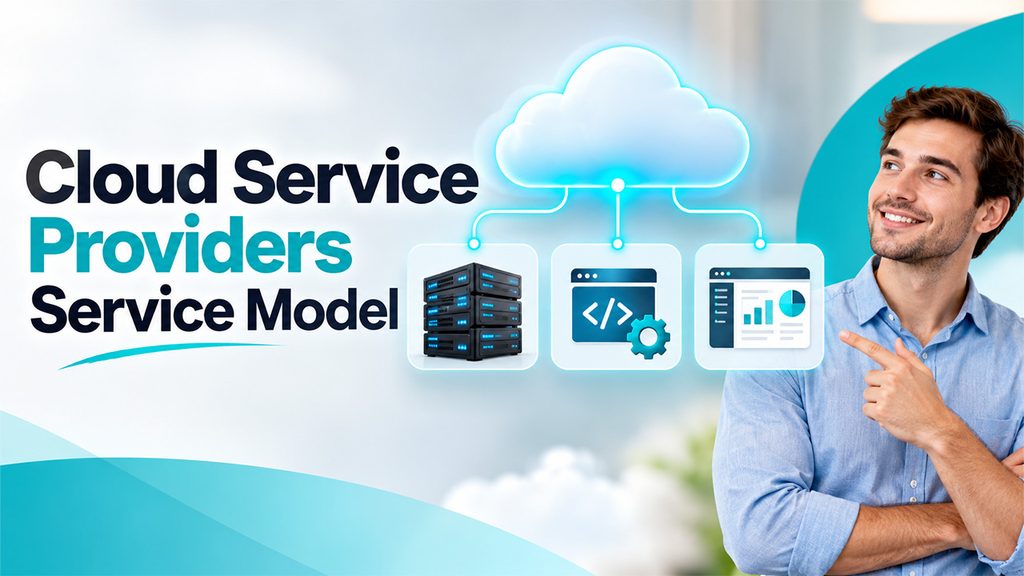
The service model of cloud service providers describes how a cloud provider delivers computing resources, applications, and technology services to businesses over the internet. Each model offers different capabilities and responsibilities, which includes Infrastructure as a Service (IaaS), Platform as a Service (PaaS), and Software as a Service (SaaS).
Infrastructure as a Service (IaaS)
The Infrastructure as a Service, or IaaS, service model offers virtual computing resources, such as servers, storage, networking, and virtual machines over the internet. Through this model, businesses can rent resources instead of purchasing and maintaining physical hardware.
Key Benefits:
- Reduces the need for expensive hardware investments.
- Allows businesses to scale resources according to demand.
- Provides greater control over operating systems and applications.
Platform as a Service (PaaS)
Platform as a Service, or PaaS, offers a ready-to-use environment for developing, testing, deploying, and managing applications. The provider handles most of the underlying infrastructure, operating system, and runtime environment. It allows developers to concentrate more on writing code and building applications, instead of spending time managing servers.
Key Benefits:
- Speeds up application development.
- Reduces infrastructure management responsibilities.
- Supports collaboration among development teams.
Software as a Service (SaaS)
Software as a Service, or SaaS, offers ready-to-use software applications over the internet. Through this model, businesses can access these applications through a web browser or mobile app, without installing or maintaining the underlying infrastructure. These providers manage the application, infrastructure, updates, and various other technical maintenance.
Key Benefits:
- Requires minimal infrastructure setup.
- Makes software accessible from different locations.
- Provides automatic updates and maintenance.
Quick Comparison
A quick comparison between all three cloud service providers is as follows:
| Features | IaaS | PaaS | SaaS |
| Main Offering | Virtual infrastructure. | Application development platform. | Ready-to-use software. |
| User Control | High | Moderate | Limited |
| Provider Management | Physical infrastructure. | Infrastructure and platform. | Infrastructure, platform, and application. |
| Technical Expertise | Usually higher | Moderate | Usually lower |
| Technical Expertise | IT teams and system administrators. | Developers | End User and businesses. |
Importance of Choosing the Right Cloud Service Provider
A cloud service provider usually does more than just store files and host applications. The platform can influence the organization’s security, operational costs, productivity, and the ability to innovate. The right provider can help businesses access reliable infrastructure, automate processes, support remote teams, and respond quickly to changing market conditions.
Some of the key reasons why choosing the right cloud service providers is important are as follows:
- Data Security: A reliable service provider protects sensitive business information through encryption, access controls, and security monitoring.
- Cost Efficiency: They help control IT expenses through flexible pricing and pay-as-you-go services.
- Scalability: They allow businesses to increase or decrease computing resources as their needs change.
- Reliability and Performance: A reliable cloud service provider supports application availability, consistent performance, and business continuity.
- Technical Support: Provides assistance in resolving technical issues and maintaining smooth operations.
- Business Growth: Enables businesses to adopt new technologies, improve productivity, and expand their operations.
- Compliance: Helps businesses meet relevant industry standards and data protection requirements.
Steps to Choose the Right Cloud Service Provider
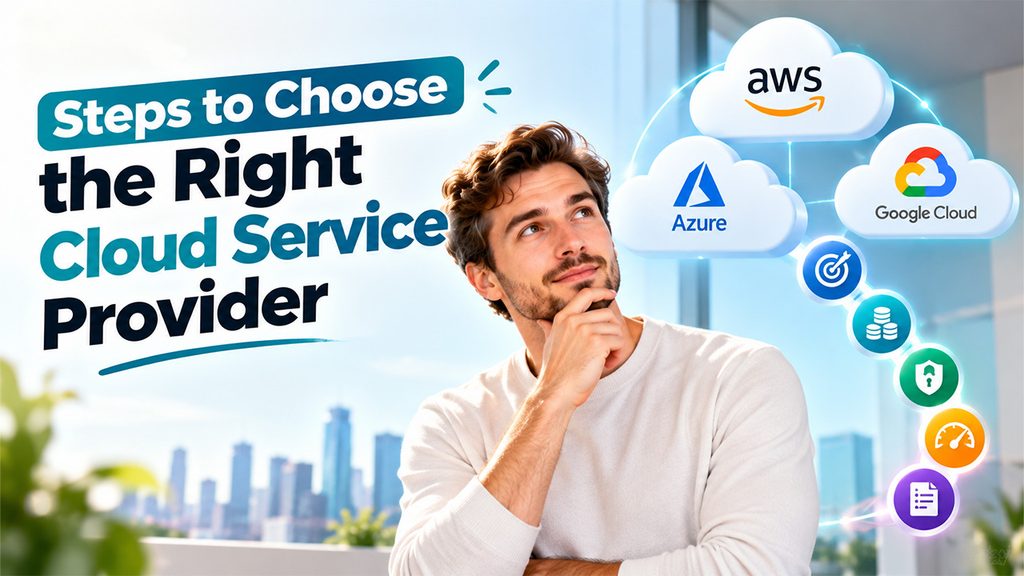
The steps to select the right cloud service provider for the business are as follows:
- Identify your business requirements
Determine which applications, workloads, databases, and storage resources need to run in the cloud. Consider your performance, security, availability, and scalability requirements.
- Establish a realistic budget
Estimate the total cost of ownership, including computing resources, storage, data transfers, software licenses, support, migration, and ongoing maintenance.
- Evaluate security and compliance
Review the provider’s security controls, access management capabilities, encryption options, compliance certifications, and data residency requirements.
- Compare performance and reliability
Assess service-level agreements, geographic regions, redundancy options, monitoring capabilities, and disaster recovery provisions.
- Review support and integration
Confirm that the provider supports your existing technology stack and offers technical assistance that matches your operational needs.
- Test before committing
Where possible, run a pilot project or proof of concept to evaluate performance, compatibility, usability, and actual costs before migrating critical workloads.
- Plan for long-term flexibility
Review data export options, migration requirements, contract terms, and potential vendor lock-in to ensure that the solution remains suitable as your business grows.
Common use cases for cloud services across industries
Cloud services have become an essential component for businesses across different industries. They help organizations store data, run applications, improve collaboration, reduce IT costs, and scale their operations.
Some of the common use cases of cloud services across industries.
- Healthcare
In the healthcare sector, hospitals store and analyze patient data securely in the cloud, ensuring faster diagnostics and compliance with privacy regulations.
- Retails
Retailers usually use a cloud platform to manage seasonal spikes. By scaling resources, the retailer ensures consistent performance without overinvesting infrastructure.
- Banking and Finance
Banks and financial institutions utilize cloud services to enable digital banking, fraud detection, financial analytics, and secure data storage.
- Education
Cloud service providers are used in the education sector to deliver online classes, manage learning materials, and support virtual collaborations.
- Manufacturing
In the manufacturing sector, cloud service providers are used to monitor equipment, optimize production, and manage supply chains.
Conclusion
Choosing the right cloud service providers is one of the most essential parts for businesses looking to improve efficiency, strengthen data security, and reduce IT costs. By evaluating cloud service models, evaluating key benefits, and considering industry-specific requirements, businesses can select a solution that can align with their goals. The right service provider usually offers the scalability, reliability, and flexibility that are needed to adapt to changing demand and support long-term growth.