

 Share on media
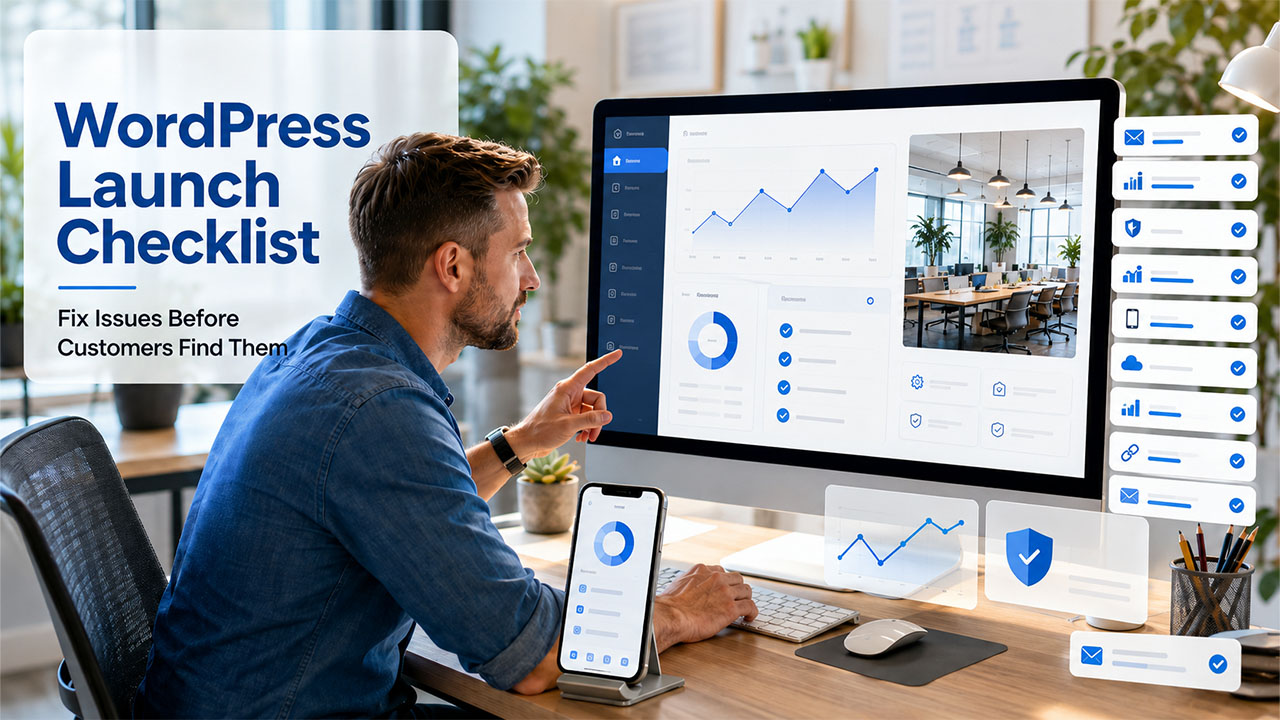


A new WordPress site needs to be ready for customers, not just ready to publish. By launch day, it should explain the offer clearly, make enquiries easy, and give visitors enough trust to take the next step.
The best time to catch problems is before anyone is sent to the site. A few checks can prevent broken forms, confusing pages, missing tracking and security gaps from becoming the first impression customers get.
Get the Basics Right Before WordPress Website Launch
Start with the things customers notice first. Your homepage should make it clear what you do, who you help and what someone should do next. If that is not obvious within a few seconds, the design is working harder than the message.
Check the basics before WordPress website launch:
- phone number, email and address details
- opening hours, service areas, and prices
- privacy policy, cookie notice, and contact page
- mobile layout on phones
- broken links and placeholder text
Search visibility also needs attention before the site is shared. Page titles, headings, image alt text, and internal links help search engines understand the site, and the same details make pages easier for customers to scan. A clear WordPress SEO checklist can help owners avoid treating SEO as something to fix later.
Create a Pre-Launch SEO Checklist
Before the WordPress website launch, users need to complete a few essential SEO checks, which are important to help search engines find, understand, and index your content.
Some of the key pre-launch checklist includes:
- Review page titles and meta descriptions to ensure they are unique and relevant.
- Check heading structure for clear content organization.
- Add descriptive alt text to images for accessibility and SEO.
- Generate and verify your XML sitemap.
- Review robots.txt settings to ensure important pages can be crawled.
Make Every Page Earn Its Place

A small business site does not need dozens of thin pages. It needs pages that answer real questions. A plumber may need emergency call-out information. A salon may need treatment times and patch test details. A consultant may need case examples and a clear enquiry route.
Keep each page focused on one main purpose. If a page is meant to sell a service, explain the problem it solves, what is included and what happens after someone gets in touch. If a paid WordPress website launch campaign is planned, a landing page shaped with a Google ads agency in London should match the advert closely, so visitors do not have to hunt for the offer they clicked on.
Set Up Local SEO Essentials
If the business serves a specific location, local SEO acts as an essential aspect before launch to help potential customers find the business in local search results.
To set up local SEO, users can follow the following steps:
- Create or update a Google Business Profile with accurate business information.
- Clearly display service areas or business locations on the website.
- Add location-specific content or pages if the business serves multiple areas.
- Embed a Google Map on the contact page of the website.
- Use local business schema markups to help search engines better understand your business details.
- Encourage customers to leave a review on Google Business Profile after launch.
Test the Customer Journey
Before WordPress website launch, go through the site as if you were a customer with no background knowledge. Send a test enquiry, book a slot, use the menu, click social links and check confirmation emails on mobile.
Forms deserve extra care. Make sure messages arrive in the right inbox, spam filters are not catching them and customers get a clear response. If the site takes payment, test the checkout with a low-value product or test mode, then check receipts and stock settings.
Security should be part of the same review. Update WordPress, themes and plugins, remove anything unused, use strong logins and set up backups before WordPress website launch. Following a comprehensive WordPress plugin guide can help you choose reliable tools and avoid unnecessary risks. Recent WordPress plugin security flaws are a reminder that maintenance affects customer trust.
Plan the First Month After Launch
Going live is not the end of the job. The first few weeks show how people use the site, which pages they visit, where they leave and which enquiries are worth following up.
Set up analytics, Search Console and conversion tracking before launch, then review them after real traffic arrives. Keep a short list of fixes rather than changing everything at once. A WordPress website launch works best when the site starts clear, secure and useful, then improves from evidence rather than guesswork.
Conclusion
A successful WordPress website launch mainly requires more than simply making the website live; it requires users to follow a complete checklist. From checking the essential business information and completing SEO tasks to testing the customer journey and monitoring performance, every step contributes to a better experience for both visitors and search engines. By following a structured WordPress website checklist, business owners can avoid common issues, build trust with potential customers, and give their website a stronger start.