

 Share on media



Confused between WordPress vs WooCommerce? Understand the features, limitations, and applications of each platform in detail.
The choice between WordPress and WooCommerce generally depends on the user’s requirements. WordPress is a content management platform that is used to create, manage, and launch websites for free. WordPress allows extensive customization to users without the knowledge of coding. On the other hand, WooCommerce is a free and open-source WordPress plugin, which is used to transform any website into an online store. WooCommerce allows users to sell physical and digital products, along with easy management of inventories, payment processing, and shipping.
The blog offers a deep dive into the WordPress vs WooCommerce comparison, offering a key understanding of the features, limitations, and application of each platform.
Understanding WordPress
WordPress is a free-to-use and open-source content management system, which is generally used to create and manage websites. WordPress is among the largest platforms that powers over 43% of the global websites. The platform was originally designed for blogging but has significantly evolved into a versatile platform that can be used to build, manage, and launch all types of websites.
There are two types of WordPress available for the users, which include WordPress.org and WordPress.com. WordPress.org is a self-hosted platform that users can download for free and launch websites using their own hosting. The platform offers unlimited access to themes, plugins, and custom codes to create a unique and customizable website. On the other hand, WordPress.com is an all-in-one platform that also includes hosting. WordPress.com offers a free and paid plan for hosting. It is a more restrictive platform, with a premium subscription required for full plugin and theme access.
Also Read
How to Secure a WordPress Site
Understanding WooCommerce
WooCommerce is a free and open-source e-commerce plugin, which is designed for WordPress. The plugin helps in transforming any WordPress website into a functional online store. It also allows users to sell any physical or digital products, manage inventories, process payments, and handle shipping.
The core plugin is free to download and provides complete control over the design, data, and functionality of the website. It also offers key features, like tax calculation, inventory monitoring, and secure payment processing. WooCommerce also allows users to process payments using popular payment gateways, like Stripe and PayPal. Users can also enable PayPal Sandbox mode in WooCommerce, using a few easy steps. The plugin is ideal for users who are seeking a highly customizable and self-hosted store. It also allows users to list unlimited products, from digital downloads to physical products.
WordPress vs WooCommerce: Key Features
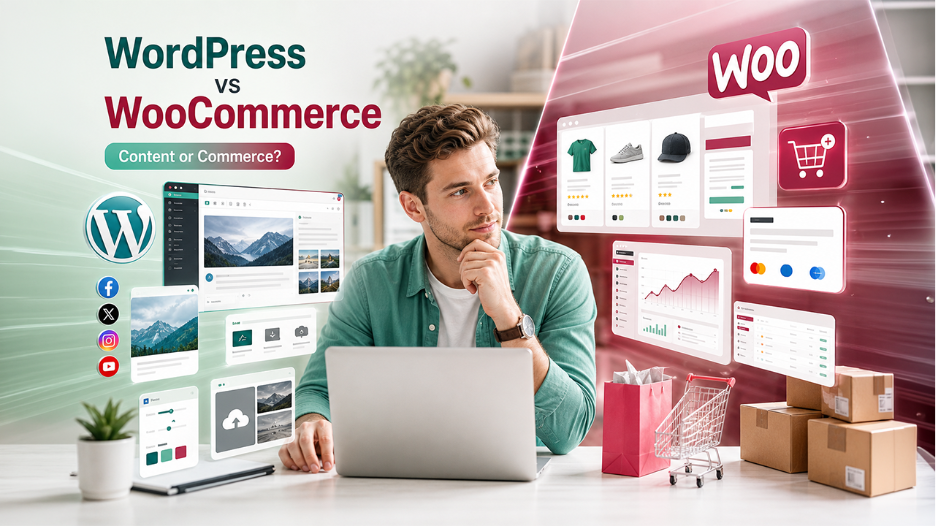
Key Features of WordPress:
WordPress is among the most popular content management systems, which allows users to create, manage, and customize websites. To design and launch a website in WordPress, users do not need any technical knowledge. It also features an intuitive dashboard, along with a vast library of themes and plugins. Some of the key features of WordPress include:
- Easy Content Management: WordPress is a user-friendly editor that enables easy creation of posts and pages. In WordPress, users can also save posts as drafts, along with scheduling them for future publication.
- Enhanced Customization: The platform offers thousands of free and premium themes and plugins, which allow users to create unique and customizable websites.
- SEO-friendly and Social Media Integration: WordPress offers clean and standards-compliant code, which makes it highly indexable by search engines. It also offers built-in tools and plugins for easy sharing and integration with social media platforms.
- Performance and Security: The platform features key security tools, like forced strong passwords, login attempt monitoring, and two-factor authentication.
- Easy Website Management: WordPress features a drag-and-drop media uploader, which includes basic editing tools. It also cleans permalinks, categories, and tags to enhance search engine ranking.
Also Read
Shopify vs WordPress: Ultimate Platform Comparison Guide
Key Features of WooCommerce:
WooCommerce is a free and open-source plugin for WordPress, which enables users to transform any website into an online store. It enables users to build and customize online stores with enhanced flexibility. Some of the key features of WooCommerce include:
- Comprehensive Product Management: It allows users to sell any type of product, including physical goods or digital downloads. It also includes product variation, along with inventory tracking, and unlimited product listings.
- Flexible Payment Options: Features a bundled option, which supports major payment options, like credit cards, bank transfer, and cash on delivery. It also offers 140+ region-specific payment gateways.
- Extensively Customizable: The plugin offers extensive customization to the users, as it is an open-source platform and features thousands of themes and extensions, easily available in the WooCommerce marketplace.
- Marketing and Analytics: It features built-in marketing tools like coupon systems, product reviews, and SEO optimizations. It also features a comprehensive dashboard, which offers detailed analytics, reporting, and order management.
- B2B Features: The plugin also supports wholesale pricing, along with customer-specific catalogs and user-specific inventory management.
Features Comparison of WordPress and WooCommerce:
| Key Aspects | WordPress | WooCommerce |
| Core Purpose | General CMS for blogs and websites | A plugin designed to create an online store. |
| Dependencies | Operate independently. | Cannot exist without WordPress. |
| Performance | Generally faster, as it only serves static content. | More resource-intensive, as it features dynamic database queries. |
| Ideal For | Building a blog, business brochure site, or personal portfolio. | Creating a flexible online store. |
WordPress vs WooCommerce: Limitations
Limitations of WordPress
Regardless of being a powerful and flexible content management system, WordPress features various key limitations, which include security risks, performance issues, and extensive maintenance. Some of the major limitations of WordPress include:
- Security Vulnerabilities: The platform is a prime target for hackers. WordPress relies on third-party plugins, which also increases the risk of vulnerabilities, data breaches, and malware.
- High Maintenance: Requires consistent and manual updates of themes, plugins, and core software. Neglecting these updates can break the site.
- Performance Issues: The heavy reliance on plugins and poorly optimized themes generally causes several performance issues and increased load time.
Limitation of WooCommerce
WooCommerce includes various key limitations, like higher maintenance costs, along with performance bottlenecks, and a higher cost of premium extensions. Some of the major limitations of WooCommerce include:
- Higher Technical Maintenance: The plugin features frequent updates, which can cause compatibility issues between the core software, themes, and plugins.
- Performance Issues: The platform is capable of handling unlimited products. This slows the plugin and makes it resource-intensive, which requires extensive optimization of hosting.
- Hidden Costs: Although the base plugin is free, various essential functionalities, like advanced payment gateways and shipping tools, often require premium extensions.
Related blog: 5 Best WooCommerce Alternatives for Growing Online Stores in 2026
WordPress vs WooCommerce: What to Choose
The core application of WordPress and WooCommerce is vastly different, yet interdependent. WordPress is the base content management system, while WooCommerce is a free plugin that is used in WordPress websites to transform them into an online store.
Key differences between WordPress and WooCommerce are as follows
| Key Aspects | WordPress | WooCommerce |
| Core Purpose | It is a content management system. | It transforms WordPress websites into a functional online store. |
| Relationship | Can be used independently. | Cannot be used without WordPress. |
| Functionality | Manages pages, posts, and media. | Adds specific features like product and shipping management. |
| Customization | Themes focus on content display. | Themes focus on product galleries and shopping carts. |
To answer the question, what to choose in WordPress vs WooCommerce? If the user needs to create a simple website, like a blog or a portfolio page, they can choose WordPress, as it is a content-focused platform. Whereas, if the users are building an online store, they choose WooCommerce plugin in the WordPress website, as it offers a robust product management tool.
Conclusion
To conclude, WordPress is a content management system that is used to create, design, and launch websites, whereas WooCommerce is a free plugin that is used to transform any website into a fully functional online store. WordPress offers users unlimited customization in creating a wide range of websites, like blog posts, individual portfolios, and business websites. WooCommerce offers users to list unlimited products easily, along with managing inventory, payment, and shipping efficiently. WooCommerce is purely dependent on WordPress for its functionality, whereas a WordPress website can be managed independently. WordPress is ideal for creating content-based websites, whereas WooCommerce is ideal for creating and managing an online store.
Also Read