


 Share on media



The guide explores in detail what SSL TLS protocols are and why they are important for website owners, developers, IT professionals, and everyday internet users. The article also explains how they work, their different versions, and key security features.
Every time a user visits a website, logs in to an online account, makes a payment, or sends sensitive information over the internet, various security protocols work behind the scenes to protect the user’s data. Among different security protocols, two of the most important technologies associated with secure internet communication are SSL (Secure Sockets Layer) and TLS (Transport Layer Security).
Users have most probably noticed “HTTPS” and the padlock icon in the browser’s address bar. These are closely associated with TLS, which offers encryption and authentication to protect web traffic. People commonly use the term “SSL certificate”, while modern websites generally use TLS.
What is SSL?
SSL, or Secure Sockets Layer, is an older cryptographic protocol that is designed to offer a secure line of communication between computers and a network. SSL was initially developed to address information transmission issues.
The SSL technology introduced the mechanism for encrypting data during transmission, authenticating servers, and protecting the integrity of transmitted information.
Key Features of SSL
- Data Encryption: The technology encrypts data transferred between the users and the server.
- Authentication: It verifies the identity of the server to help prevent impersonation.
- Data Integrity: Helps ensure that information is not modified during transmission.
- Secure Communication: Creates a protected connection between clients and servers.
What is TLS?
TLS, or Transport Layer Security, is the successor to SSL technology. TLS technology offers cryptographic protection for communication across networks and is widely used for HTTPS, email, APIs, messaging systems, and other internet services.
The platform helps offer three major security properties:
- Confidentiality: Unauthorized parties should not be able to read protected data.
- Integrity: Data should not be altered while transiting.
- Authentication: A client can easily verify that it is communicating with the intended server.
Key Features of TLS
- Data Encryption: Protects information from being read by unauthorized parties.
- Authentication: Verifies the identity of the server using digital certificates.
- Data Integrity: Detects unauthorized changes to data during transmission.
- Secure Communication: Establishes a protected connection between client and server.
Difference Between SSL and TLS
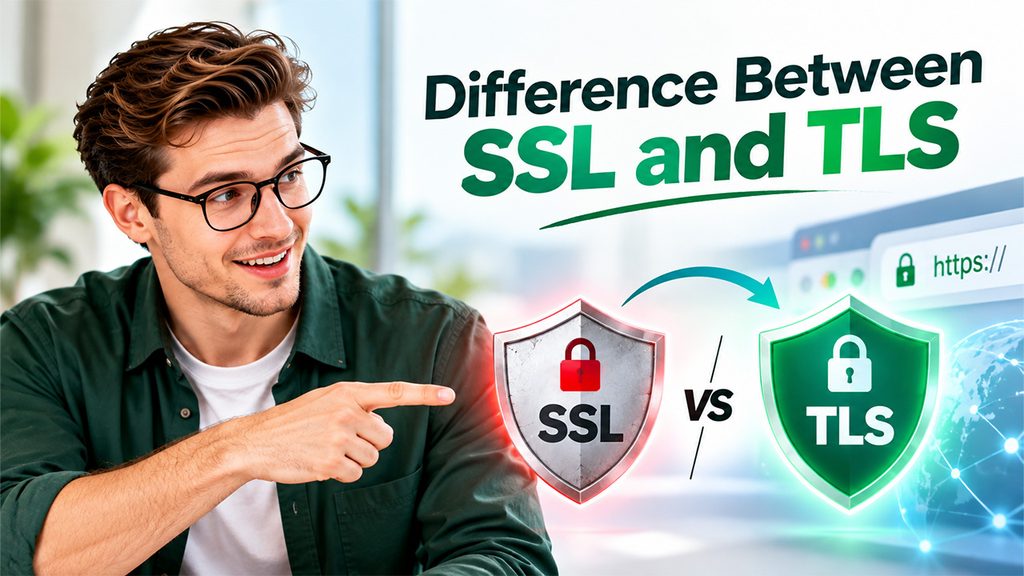
SSL and TLS protocols are cryptographic protocols that are designed to secure communication between a client and a server. TLS is the successor to SSL and was mainly developed to improve security, reliability, and protocol design. SSL protocol is now mainly considered obsolete and insecure, while modern systems typically use TLS 1.2 or TLS 1.3 protocols.
SSL TLS Protocol: Quick Comparison
A quick comparison between SSL and TLS protocols are as follows:
| Features | SSL | TLS |
| Technology | Older protocol | Modern successor to SSL |
| Security | Outdated and vulnerable. | More secure with modern configuration. |
| Encryption | Supports older cryptographic methods. | Supports strong, modern cryptographic methods. |
| Handshake | Older and less efficient design. | Improved handshake design, especially in TLS 1.3. |
| HTTPS | Historically associated with HTTPS. | Used by modern HTTPS connection. |
How Does TLS Work?
The TLS connection generally involves several cryptographic operations. The process of TLS includes the following:
Client Starts the Connection
The browser, application, or other client connects to a server and indicates that it wants to establish a secure TLS connection. The client also shares information about supported TLS versions and cryptographic capabilities.
Server Responds
The server selects compatible security parameters and sends information back to the client. The server also provides a digital certificate that allows the client to verify the identity of the server.
Certification Verification
The browser checks whether the certificate is valid and whether it can be trusted. The process of certificate validation includes checking the certificate’s validity period, domain name, certificate chain, whether the certificate authority is trusted, and whether the certificate has been revoked or otherwise invalidated.
Key Establishment
The client and server perform a cryptographic key exchange process. The modern TLS configuration uses a secure key exchange mechanism, allowing both sides to establish shared secret keys directly without transmitting those session keys across the network.
Encrypted Communication Begins
After the handshake is completed, application data can be protected using symmetric encryption.
What is SSL TLS Protocol Certificate?
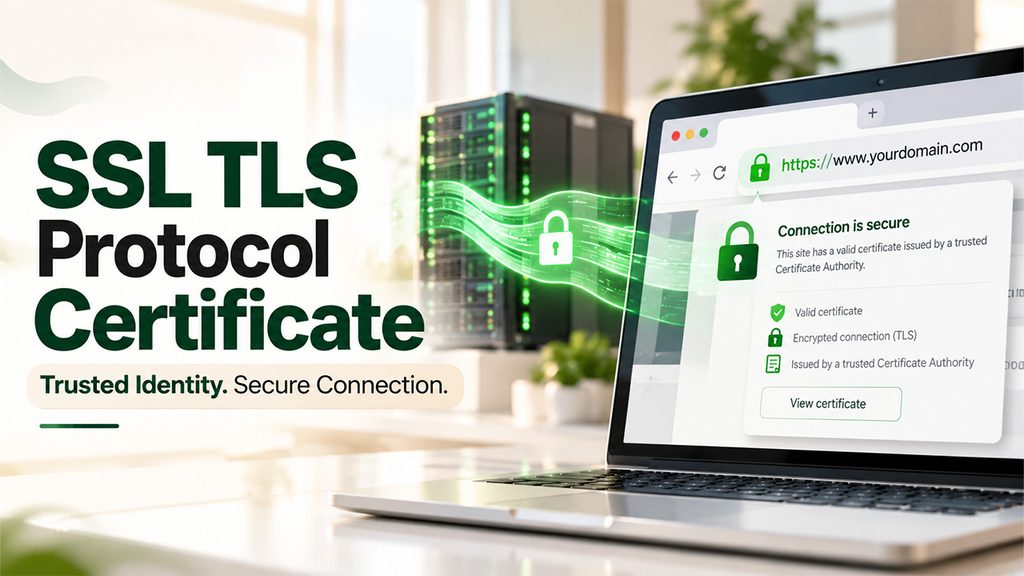
An SSL/TLS certificate is a digital certificate that is used to help authenticate a website or server and establish secure HTTPS communication. Although it is commonly termed as an “SSL certificate”, modern websites generally use TLS for secure data transfer.
- Digital Identity: Helps verify that a website or server is associated with a specific domain.
- Encryption Support: Enables the TLS connection to establish cryptographic protection for data exchanged between the browser and server.
- Authentication: Helps the browser verify the server’s identity through a trusted certificate chain.
- HTTPS Connection: Certificates are an important part of establishing secure HTTPS connections.
- Public Key: Contains a public key associated with the certificate and its identity information.
- Certificate Authority (CA): Certificates are typically issued and digitally signed by trusted Certificate Authorities.
Why is TLS Essential for Websites?
Transport Layer Security is essential for websites as it helps in protecting communication between the user’s browser and web servers. However, TLS is only one part of a broader website security strategy.
TLS creates a secure communication channel between a website and its visitor. Website owners can also follow these how to secure a WordPress site practices to strengthen their website security. TLS helps keep the transmitted information private, verifies the server’s identity, and protects data from any unauthorized modification.
- Protects Sensitive Data: TLS encrypts information such as passwords, payment details, and personal data during transmission.
- Provides Authentication: TLS certificates help browsers verify that they are communicating with the intended website.
- Ensures Data Integrity: TLS helps detect whether data has been modified while traveling between the browser and server.
- Enables HTTPS: TLS provides the security layer behind HTTPS, which is used by modern secure websites.
Conclusion
SSL TLS protocols play a critical role in securing internet communication and protecting sensitive information. While SSL is not considered an outdated technology, modern websites mainly rely on TLS to provide encryption, authentication, and data integrity through a secure HTTPS connection.
For website owners and developers, using the modern TLS protocol is an essential part of building secure online services. For users, recognizing HTTPS and understanding what it does can help explain how information is protected while traveling across the internet.
Frequently Asked Questions
What is a TLS certificate?
A TLS certificate is a digital certificate that helps authenticate a website or server and supports the establishment of a secure HTTPS connection.
Is TLS the same as HTTPS?
No, TLS is not the same as HTTPS. TLS is a security protocol, while HTTPS is transmitted through a TLS-protected connection.
What are the main features of TLS?
The main features include data encryption, authentication, data integrity, secure communication, and support for modern cryptographic mechanisms.
What is SSL/TLS encryption?
SSL/TLS encryption protects data transmitted between a client and server so that unauthorized parties cannot easily read the information while it is in transit.