



 Continue with Google

 Share on media
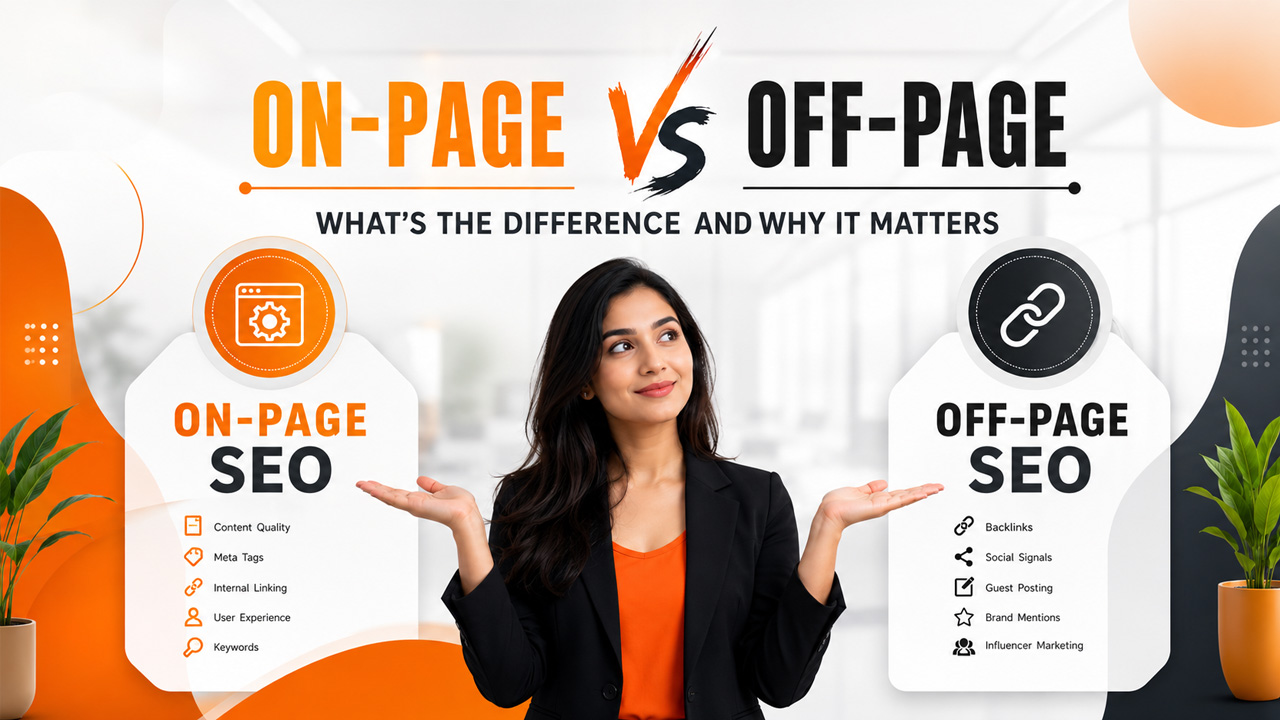


On-Page vs Off-Page SEO – On-Page SEO focuses on the parts of your websites that are within your control, whereas Off-Page SEO focuses on increasing the authority of your domain through content creation for external signals and relationships. For further understanding, Let’s break it down.
What is On-Page SEO?
On-Page SEO refers to the things you have control over and can change on your own website to rank higher in search engines. It is used for optimizing web pages and increasing organic traffic.
Key elements of On-Page SEO
- Meta descriptions: Create short and engaging summary of content.
- Images: Use content related, eye-catching images.
- Content Quality: Create original, accurate, and valuable content.
- User Experience: Optimize page load speed and create an audience-friendly structure.
- Internal Links: Connect relevant hyperlinks that point to other pages of your websites.
What is Off-Page SEO?
Off-Page SEO refers to techniques that are used to improve the position of website on the search engine result pages (SERPs). The biggest factor is the number and quality of backlinks pointing to your websites.
Key elements of Off-Page SEO
- Social Media Marketing: Share valuable and engaging content to increase visibility.
- Guest Blogging: Writing and publishing engaging articles for trusted websites to gain visibility, authority, and exposure.
- Backlinks: Gain high quality link from trusted websites to boost authority and ranking.
- Influencer Marketing: Collaborate with influencers to increase reach and credibility.
- Brand Mentioning: References on reputable sites for gaining credibility.
Difference between On-Page vs Off-Page SEO
On-Page SEO focuses on the parts of your website that help improve search rankings.
- Focusing on the quality of content and overall structure of websites.
- Helps in improving user experience.
- Adding links between pages on your sites.
- Ensuring responsiveness for audience-friendly content.
- Emphasis on establishing topical authority through high-quality content.
Key Factors:
- Schema Markup: Adding a standardized structure to the website.
- Content Quality: Creating original, accurate and high-quality content for higher ranking
- Meta Description: Creating a short and engaging summary about the content for the users.
- URL Structure: Adding relevant keywords to your URL helps search engines understand page context.
- Internal Links: Connecting content related hyperlinks pointing to other relevant webpages.
- Page Content: The content of your page should add value to end users, they should find the content easy-to-understand.
Off-Page SEO focuses on the parts you can do outside of the website to enhance its ranking, it may involve-
- Focusing on earning links from third-party websites to enhance domain authority.
- Helps in improving external credibility.
- Establishing the website as an industry authority.
- Managing your reviews to external platforms.
Key Factors:
- Guest Posting: Writing and publishing engaging articles for trusted and reputable websites to gain exposure and build authority.
- Social Media Marketing: Creating and sharing valuable and engaging content to increase visibility in ranking.
- Backlinks: Writing for trusted websites for gaining high-quality links to boost authority.
- Brand Mentioning: Gaining references on reputable sites to enhance credibility.
- Influencer Marketing: Collaborating with influencers to increase traffic.
- Online Reputation Management: Monitoring social media and reviews to ensure they accurately portray your content.
Why are On-Page and Off-Page SEO important?
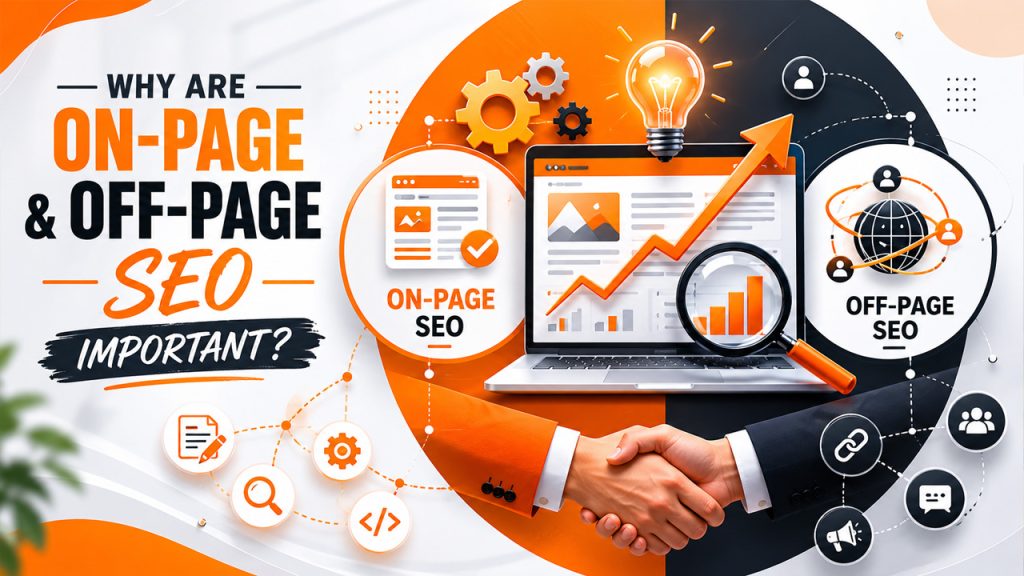
The bottom line is that you need both for success. Many people make the common mistake of using just one of the strategies when trying to build their website’s search engine ranking, which results in little to no improvement whatsoever.
On-Page SEO is necessary to make your website ready. Not only does it provide users with relevant information, but it ensures that your pages are easily accessible by search engines and human readers alike. Otherwise, all of the work you do will be in vain because users will visit your page, become disappointed and leave.
Off-Page SEO helps establish your website as a credible source on the internet. You can work day and night improving every single page on your website, but without external signals coming from any other reputable source, the progress will be very slow indeed. In essence, Off-Page SEO helps search engines evaluate your website’s authority.
Off-Page SEO Requires Real Relationships
Genuine Relationships Are The Only Way To Go For Off-Page SEO
Some of the most reliable Off-Page SEO techniques have a strong relational component.
- Guest posting is much more effective when you write for a site you actually respect, adding some value through your writing rather than sending an article simply because you want the link. Knowing when to choose between guest post vs link insertion makes a real difference in how those backlinks perform long term.
A simple way to find guest posting opportunities is to search for phrases like “marketing write for us,” “ write for us + technology” or “health write for us.” This helps you discover niche-relevant websites that actively accept guest contributions.
- Backlinks formed via partnerships and actual outreach are likely to stick around for far longer than those that came from any sort of hacks.
- The same rule applies to social media marketing and influencer marketing. Your audience will be able to tell whether you are simply going through the motions.
- Authentic content produced by influencers or brand partners who genuinely believe in the product or message tends to receive higher engagement rates.
It takes time to form such relationships. It may take years before you accumulate fifty backlinks from leading industry sites. However, by writing an email now, creating quality content, and engaging in online discussions, you can create the conditions under which all these efforts will start paying off sooner than later.
Focus on What Truly Matters
There are far too many people focusing on irrelevant metrics. For example, people tend to fixate on the ranking positions for certain keywords while forgetting all about everything else. Rankings are important, yet they do not represent the entire picture.
Changes in organic traffic will indicate whether the SEO efforts are moving in the right direction. The bounce rate and time spent on the page show whether the visitors are satisfied by what they are getting from the page. The referring domains number and quality will help to see if any real progress is made within the Off-Page SEO optimization efforts.
It would be foolish not to make use of completely free and highly effective Google Search Console and Google Analytics tools. Even dedicating thirty minutes per week to analysing the stats available will provide a huge amount of information that paid SEO tools cannot give.
Final Thoughts
On-Page SEO and Off-Page SEO are not rivalling tactics but two different elements of the same process. The first one focuses on creating the inner architecture and content of your website. The second one focuses on your reputation, which is built through mentions, links, and references from other websites. These two elements combined will provide the very presence that will help both search engines and people value your site.
Begin with your On-Page basics. Ensure that your content is excellent, your website performs well, and your website’s pages are organized nicely. When everything is done from the inside, focus on the external processes. Establish connections with others, earn links, participate in discussions on various forums, blogs, and let others reference your expertise naturally.
Everything is simple and logical about SEO. Just be consistent enough.