

 Share on media
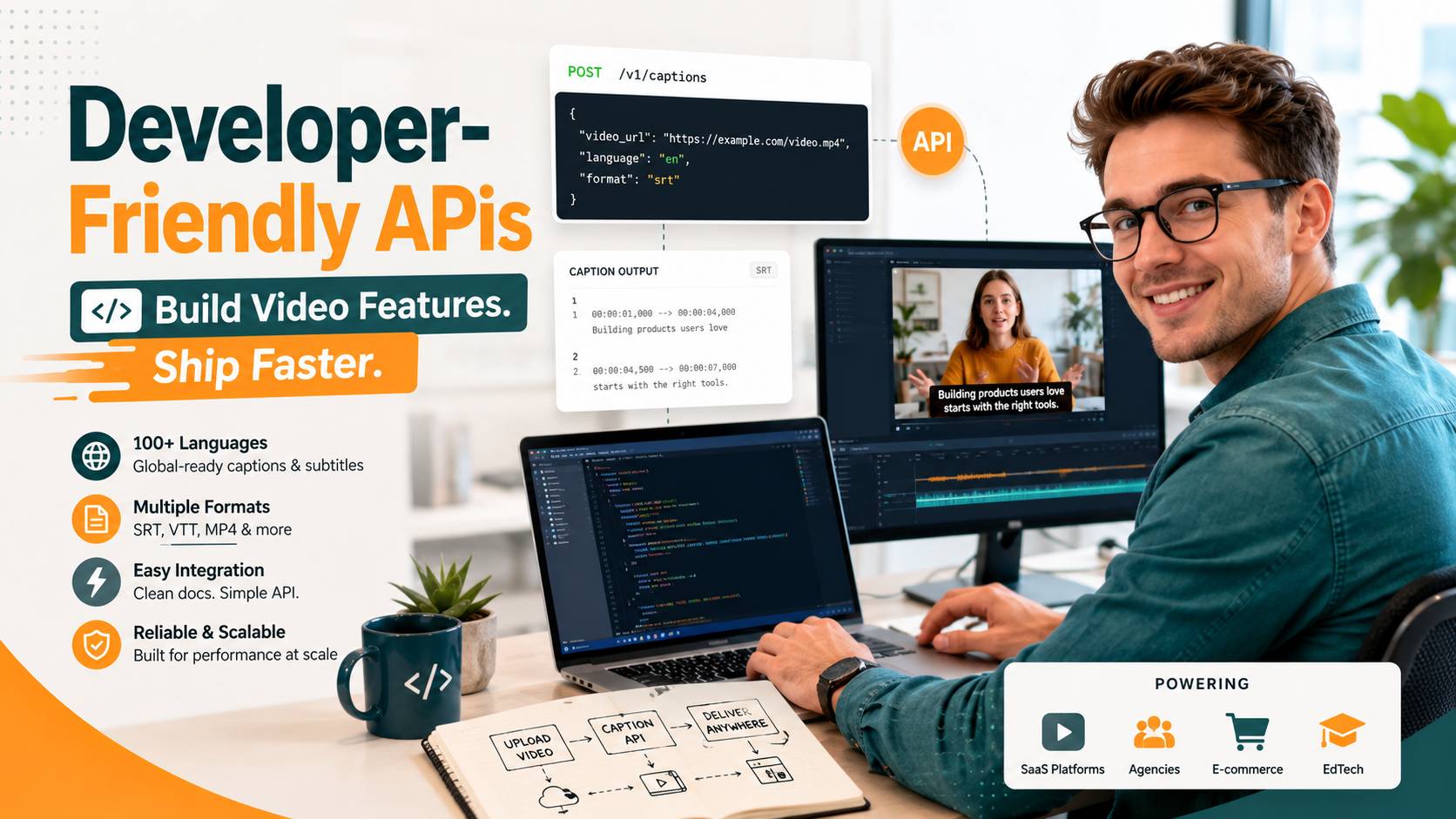


Adding captions or subtitles to a video generally means hiring someone and performing manual tasks. For this, developer-friendly APIs help in making the entire process easy and fast. Poor documentation can significantly slow down the setup, along with inconsistent error messages turning debugging into a guessing game. Moreover, a missing sandbox environment makes software testing more difficult, as developers may end up testing against live production systems before they’re ready. The guide explores the best options for teams building video captioning into their products.
Behind the ranking
Each option was assessed using publicly available information pulled from official product pages, user review platforms, and documented case studies. Only tools with a proven track record in the SaaS space made the final cut.
→ See the full research breakdown
- ZapCap: Best for video content creators, marketing agencies, and SaaS platforms needing multilingual captioning
- Bannerbear: Best for automated social media visuals and e-commerce banner generation
- AutoCaption: Best for video creators and content marketing teams
- Submagic: Best for short-form video creation and content automation
- fal: Best for SaaS platforms and developer tools
- Veed: Best for video creation and embedded video APIs for SaaS
The Real Impact of Developer-Friendly APIs
Choosing the wrong captioning API doesn’t just slow down development. It creates compounding problems across your entire product team. Outdated or thin documentation forces developers to reverse-engineer expected behavior, which kills time to first successful API call (TTFC) before the first release even ships. Vague error messages make debugging feel like archaeology. The right API, built with developers in mind, cuts through that friction. It ships with clear docs, predictable error handling, and output formats that drop cleanly into existing pipelines, which means faster TTFC, better API reliability and availability percentage, and lower average response time in milliseconds across the board.
6 Top Picks at a Glance
Note: All data in this table is sourced from review platforms and the official websites of the listed companies.
| Company Name | Headquartered In |
| ZapCap | Sydnay, Australia |
| Bannerbear | Singapore |
| AutoCaption | France |
| Submagic | Paris, France |
| fal | San Francisco, California |
| Veed | London, UK |
1. ZapCap – Best for Multilingual AI Captioning Across SaaS and Creator Platforms
What Services and Products Does ZapCap Offer?
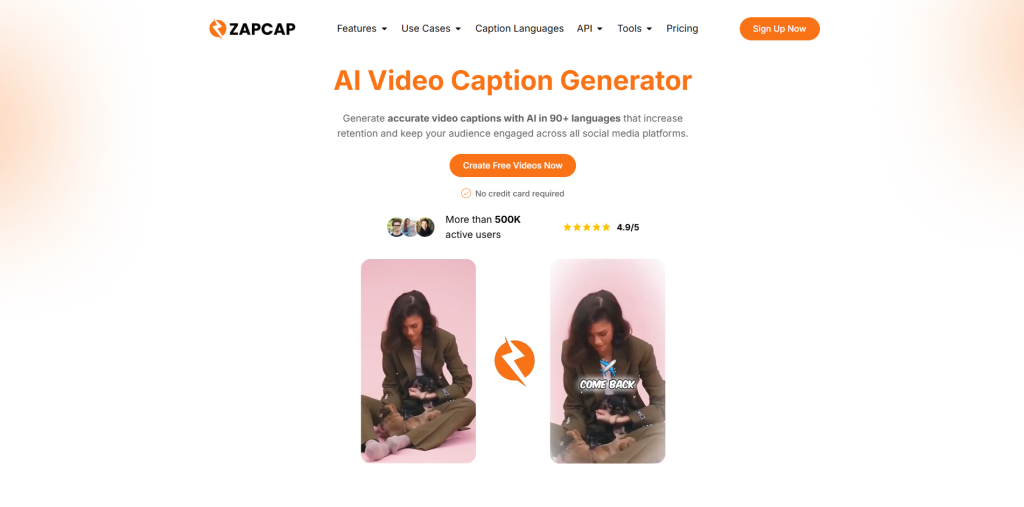
ZapCap is an AI video editing platform that generates accurate captions and subtitles across 90+ languages with frame-accurate timing. SaaS teams that want to render video captions through ZapCap API get access to flexible output formats including MP4, SRT, and VTT, which means captions drop cleanly into almost any pipeline. Beyond captioning, the platform automates B-roll selection, auto-cuts, sound effects, and description generation. With 500K active users and over 700K videos created, it’s a proven infrastructure choice for agencies, e-commerce businesses, and AI video SaaS companies alike.
Why Is ZapCap a Contender for Developer-Friendly APIs?
SaaS teams across the globe are building various multilingual video products that often hit the wall when captioning APIs lack accuracy and language breadth. To solve this issue, the API-first design of ZapCap combines support for over 100 languages and a clean output format option, making it one of the most practical choices for teams that need to ship quickly without building caption infrastructure from scratch.
Real User Sentiment:
ZapCap has grown to be the most popular platform for creating videos at scale. The review points of the platform earn trust through its enhanced reliability and consistency, rather than just flashy claims.
2. Bannerbear – Best for Automated Visual Content at Scale
What Services and Products Does Bannerbear Offer?
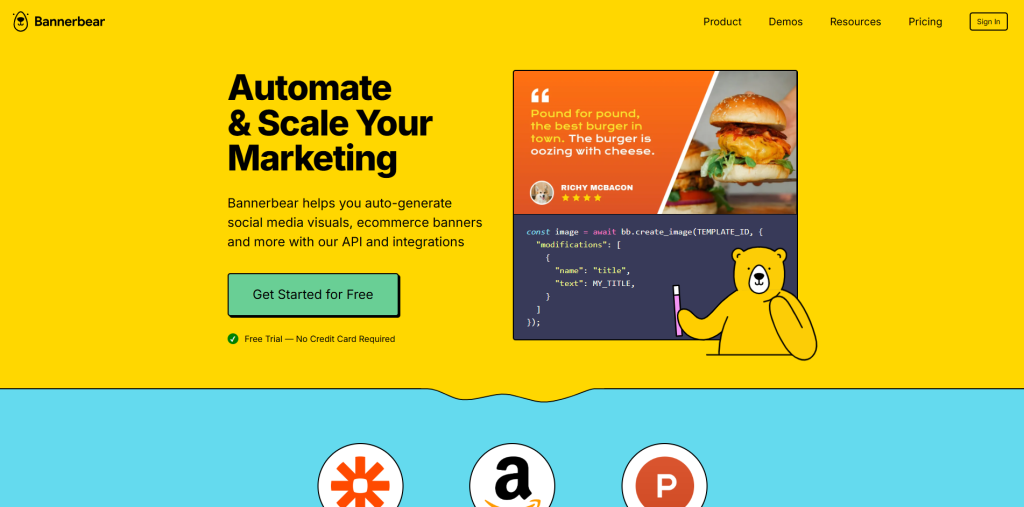
Bannerbear is an API-first tool that can generate social media visuals, e-commerce banners, and marketing assets at large automatically, through its no-code automated workflows. The platform connects seamlessly with various tools like Airtable and Zapier, making it easy for the non-technical marketers to trigger content generation, without writing a single line of code. For SaaS teams, that means automating repetitive asset production without adding headcount. Bannerbear focuses narrowly on visual content generation, and that focus shows how polished the API behavior is. It’s a bootstrapped, profitable company with 596+ customers and official Zapier Partner status (not bad for a team of under ten people).
Why Is Bannerbear a Contender for Developer-Friendly APIs?
Marketing and growth teams inside SaaS companies spend hours on repetitive visual asset production, which is exactly the problem Bannerbear is built to remove. Their API-first architecture, combined with deep partnerships, means the tool fits into existing workflows rather than replacing them.
Real User Sentiment:
Bannerbear’s customer base stays engaged because the product does what it promises without unnecessary complications. The reviews show that users value the transparent, no-code approach and the fact that the API behaves predictably. That predictability is often what keeps SaaS teams coming back.
3. AutoCaption – Best for Fast, Multi-Platform Caption Generation
What Services and Products Does AutoCaption Offer?
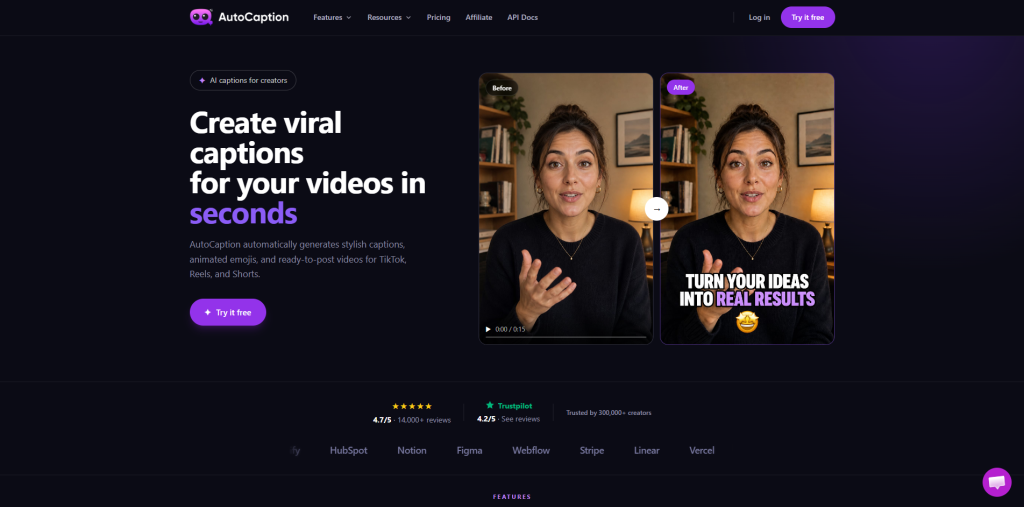
AutoCaption is an AI caption generator built for creators and businesses distributing videos across TikTok, Instagram, and YouTube. It supports 100+ languages, processes most videos in under 10 seconds, and handles all major video formats up to 4K resolution. The platform adds animated emojis and stylized captions automatically, and one-click resizing handles different platform aspect ratios without extra manual work. API access unlocks higher pricing tiers, which makes sense for teams to scale output rather than individual creators. With 300K+ creators using the platform, it has proven itself outside of niche circles.
Why Is AutoCaption a Contender for Developer-Friendly APIs?
Content marketing teams need caption tools that match the pace of modern publishing, and AutoCaption’s sub-10-second processing time addresses that directly. Partnerships with brands like Adobe, Shopify, HubSpot, and Canva signal that the platform works well in established SaaS ecosystems, which matters when you’re evaluating adoption risk.
Real User Sentiment:
A 4.7/5 rating across more than 14,000 Trustpilot reviews is the kind of signal that’s genuinely hard to fake at scale. Users consistently highlight speed and language accuracy as standout traits. That’s a pattern worth paying attention to when your product’s quality depends on caption reliability.
4. Submagic – Best for Short-Form Video Automation at Speed
What Services and Products Does Submagic Offer?
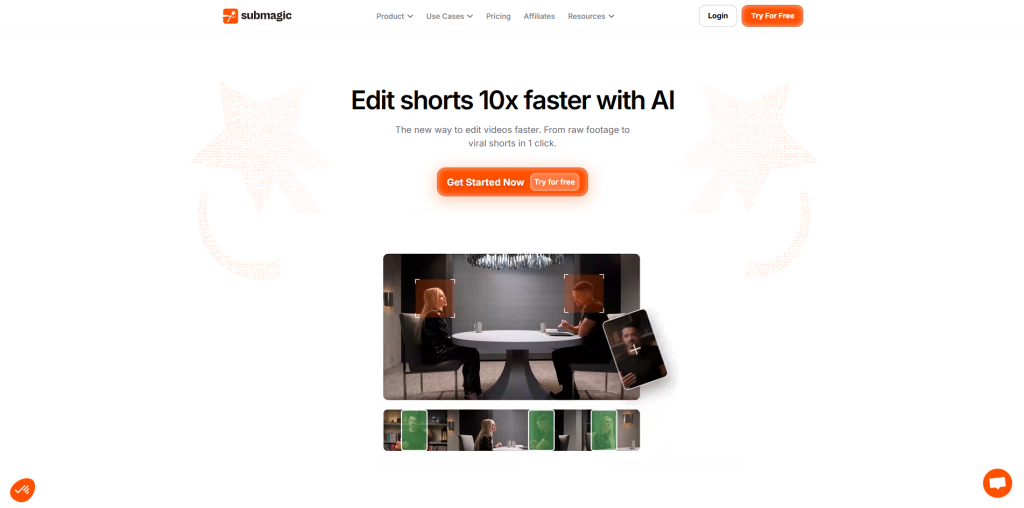
Submagic is an AI video editing platform focused on short-form content production. It generates captions, B-rolls, and visual effects automatically, supporting 48 languages with 99% accuracy. The platform claims editing speeds 10x faster than traditional methods, and exports go up to 4K at 60fps. Magic Clips repurposes long-form video into shorter clips without manual cutting. For SaaS platforms, the API tools and publishing integrations make it a reasonable fit for teams automating content pipelines. Growing from $1M to $8M in revenue between 2023 and 2025 without outside funding says something real about product-market fit (not every SaaS can say that).
Why Is Submagic a Contender for Developer-Friendly APIs?
Short-form video is one of the highest-volume content formats for modern marketing teams, and Submagic is built for that output speed. Their documented client results, like Sportskeeda’s 40% reach growth and 2,500+ monthly videos, show the platform can perform at genuine production scale rather than just demo scale.
Real User Sentiment:
Submagic’s growth numbers speak louder than review ratings for a company this young. The data shows the platform is earning real trust from enterprise-scale clients, which is a strong signal for SaaS teams evaluating long-term reliability. That kind of traction at an early stage is rare.
5. fal – Best for High-Speed AI Inference and Developer-First Scaling
What Services and Products Does fal Offer?
fal.ai is a generative AI platform that hosts 200+ open and closed-source models through its own Inference Engine. For video captioning, it offers automated captioning with customizable text specifications, running on infrastructure that claims 4x faster inference speeds than standard alternatives. The platform serves 1 million+ developers and enterprise customers including Adobe, Canva, and Shopify, with 99.99% reliability and support for 100M+ daily inference calls. The prepaid credit pricing model and pay-only-for-success structure make cost management more predictable (think enterprise pricing, but with startup-friendly flexibility built in).
Why Is fal a Contender for Developer-Friendly APIs?
SaaS teams building AI-heavy products often face infrastructure bottlenecks when API call volume spikes unexpectedly. fal.ai’s Inference Engine, capable of scaling from prototype to 100M+ daily calls, addresses that growth curve without requiring teams to re-architect their stack.
Real User Sentiment:
Backing from Andreessen Horowitz and Sequoia Capital, plus unicorn status within five years, reflects confidence from people who evaluate risk seriously. Developers trust fal.ai for stability and speed, and the enterprise client list reinforces that the platform performs at scale, not just in testing conditions.
6. Veed – Best for Embedded Video APIs and Browser-Based Creation
What Services and Products Does Veed Offer?
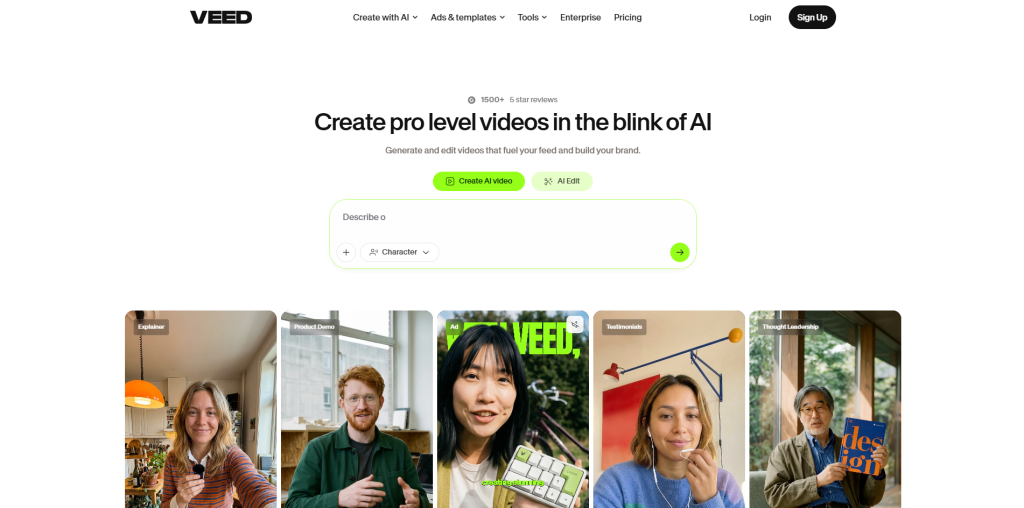
VEED is a browser-based video creation platform that combines timeline editing with AI tools including subtitle generation, lip sync, green screen removal, and background removal. Its Subtitles API and Image-to-Video capabilities make it a realistic option for SaaS platforms looking to embed video functionality directly into their product. The company serves 12+ million monthly users and carries a $160M valuation with $57M ARR. Sequoia’s $35M investment rounds out a profile that reads more like infrastructure than a standalone editor. Major brands like P&G, Pinterest, and Visa are already on the customer list (that’s a meaningful trust signal).
Why Is Veed a Contender for Developer-Friendly APIs?
SaaS platforms that want to offer video creation inside their product without building it from scratch need an API partner that has already proven scale. VEED’s ability to reach 12+ million monthly users without major infrastructure overhead shows the platform can handle growth without becoming a liability.
Real User Sentiment:
A 4.6/5 rating on Trustpilot across more than 3,000 reviews reflects consistent quality rather than isolated wins. Users value the browser-based simplicity and the reliability of the subtitle tooling. For teams that need embedded video features shipped quickly, VEED shows up reliably in the conversation.
How These Were Chosen and Verified
Step One: Data Assembly and Preparation
The research started by pulling together a broad list of captioning and subtitle API providers from directories, SaaS review platforms, product documentation hubs, and published case studies. The goal at this stage was coverage, not curation. Every tool that surfaced as a credible option in the video captioning space was added to the working list, regardless of size or brand recognition.
The Shortlisting Pass
From that initial pool, any tool without verifiable feedback or documented real-world results was removed. Review patterns were analyzed across multiple platforms to filter out options with inconsistent or thin track records. Tools that surfaced repeatedly with clear, positive patterns, particularly around documentation quality and API reliability, moved to the next stage.
Verification Pass
Each shortlisted tool was then cross-checked by comparing what the official product pages claimed against what actual users reported. Where a company advertised fast processing times or high language accuracy, those claims were weighed against documented user experiences and published client results. Any gap between claimed and reported performance was flagged.
Industry Recognition and Authority
Tools were also evaluated based on external signals of authority. These included mentions in industry publications, recognizable enterprise client relationships, investor backing from credible firms, and award recognition within the developer tools or video production space. Companies that appeared repeatedly in credible third-party contexts carried more weight in the final assessment.
Evidence Specific to Developer-Friendly APIs
Finally, each tool was evaluated on its direct relevance to developer-facing API use cases for video captioning. This included reviewing dedicated API documentation pages, confirmed SDK availability, published developer case studies, and verified feedback from engineering teams or SaaS builders. Tools with strong evidence of developer adoption and clean API behavior made the final list.
What to Look For When Choosing Developer-Friendly APIs
Picking a captioning API for a SaaS product isn’t just about which tool generates the most accurate transcript. The right fit depends on how well the API behaves inside your existing architecture, how much support you get when things break, and whether the pricing structure makes sense as you scale. Here’s what actually matters:
- Industry/Domain Experience: Look for tools with documented SaaS deployments, not just individual creator use cases. An API built for high-volume, automated pipelines behaves differently from APIs and libraries designed for manual use.
- Features and Service Options: Check for multi-language support, output format options (SRT, VTT, MP4), and automation depth. The more a tool covers out of the box, the less custom code your team writes.
- Pricing Structure: Prepaid credits, usage-based billing, and free tier to paid plan conversion rates all affect unit economics. Make sure the model scales without surprise costs at volume.
- Results Measurement: Time to first successful API call (TTFC) and average response time tell you more about real-world performance than marketing copy does. Ask for benchmarks.
- Industry Knowledge and Compliance: For video APIs handling user content, confirm adherence to relevant API security standards. OAuth 2.0, data privacy constraints, and API usage limitations matter more as your product scales.
Final Take
The six tools covered here each solve a slightly different version of the same problem. ZapCap and Veed bring full API ecosystems with proven scale. AutoCaption and Submagic win on speed and ease of use. fal.ai is the pick for teams building AI-heavy products that need infrastructure-grade reliability. Bannerbear rounds things out for visual asset automation. As demand for video content grows, the captioning API space will keep maturing, and developer experience will become the clearest differentiator between tools that stick and tools that get swapped out.