
 Share on media
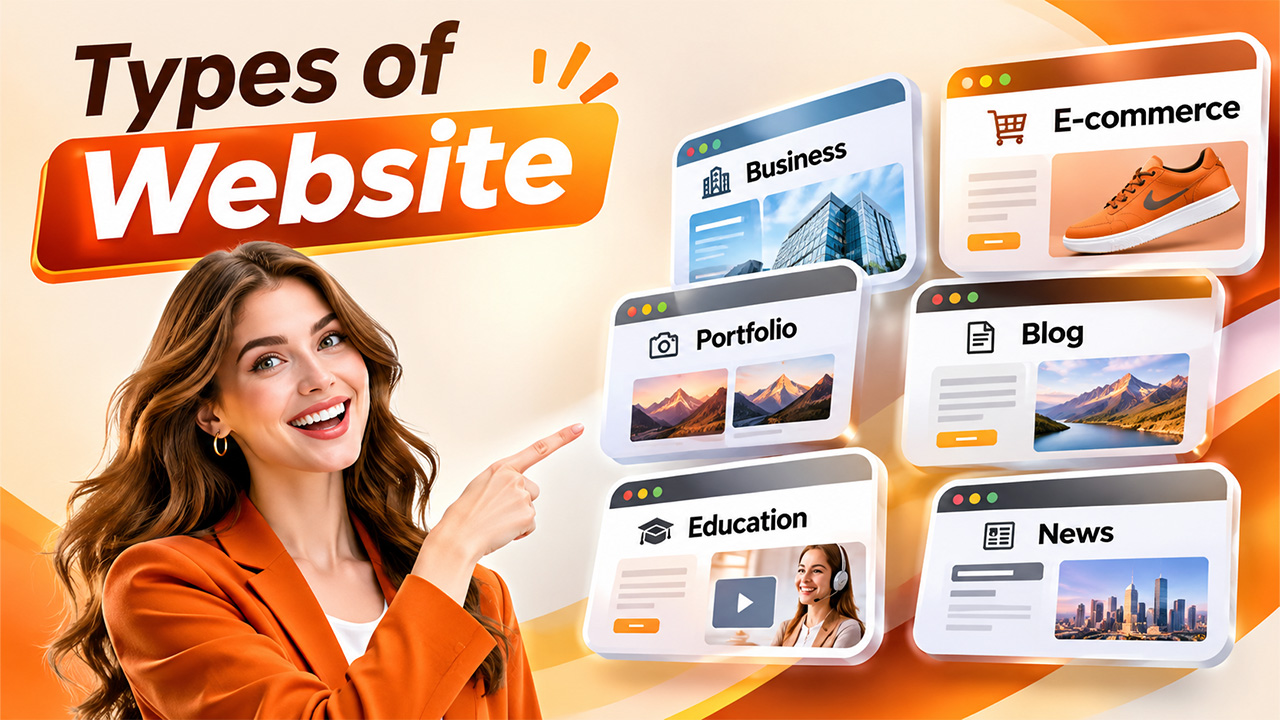


When people think about websites, they often imagine online stores with product pages, shopping carts, and checkout buttons. While e-commerce websites are certainly important, they represent only one type of website among many.
Not every website is built to sell a product. Some websites exist to share information, build trust, showcase creative work, educate audiences, collect donations, support communities, or help users complete a specific task. The purpose of a website determines its structure, design, features, content strategy, and user experience.
Choosing the right type of website is one of the most important decisions for any business, organization, or individual. A website that is designed for the wrong purpose can confuse visitors, fail to generate results, and waste time and money.
This article explains the different types of websites and what each one is built to achieve. It also highlights the importance of matching website functionality with real business or organizational goals.
Why Website Purpose Matters
A website is more than a collection of pages. It is a digital tool designed to support a specific goal. That goal may be generating leads, selling products, building a personal brand, educating students, sharing news, or supporting a social cause.
Before building a website, businesses and organizations should clearly define what they want visitors to do. A clear purpose helps guide decisions about types of website related to design, content, navigation, functionality, and calls to action.
For example, a law firm website may focus on building credibility and encouraging visitors to request a consultation. An online clothing store may focus on product discovery, secure checkout, and repeat purchases. A nonprofit website may focus on sharing its mission, building trust, and encouraging donations.
When the website purpose is unclear, visitors often leave without taking action. When the purpose is clear, every page can guide users toward a meaningful next step.
1.Business Websites
A business website is one of the most common types of websites. Its main purpose is to represent a company online, explain its products or services, build credibility, and generate leads.
Business websites usually include pages such as Home, About Us, Services, Products, Case Studies, Testimonials, Contact Us, and Blog. They may also include service area pages, team profiles, FAQs, pricing information, and lead-generation forms.
The primary goal of a business website is not always direct sales. For many service-based businesses, the goal is to encourage visitors to contact the company, request a quote, book an appointment, or schedule a consultation.
A strong business website should clearly communicate what the company does, who it serves, and why visitors should choose it. It should also make it easy for potential customers to take the next step.
2.E-commerce Websites

E-commerce websites are designed to sell products or services online. These types of website allow visitors to browse products, view details, add items to a cart, complete checkout, and make payments digitally.
These websites require more complex functionality than a standard business website. They often include product catalogs, product filters, shopping carts, secure payment gateways, inventory management, order tracking, customer accounts, shipping options, and return policies.
The success of an e-commerce website depends on more than attractive design. It depends on a smooth buying journey. Visitors should be able to find products easily, understand pricing and shipping details, trust the payment process, and complete checkout without confusion.
E-commerce websites can serve many business models, including retail stores, digital product sellers, subscription businesses, marketplaces, and business-to-business suppliers.
3.Portfolio Websites
A portfolio website is designed to showcase an individual’s or company’s work. It is commonly used by designers, photographers, writers, developers, artists, architects, consultants, and creative agencies.
The main goal of a portfolio types of website is to demonstrate skill, experience, and quality. Instead of simply telling visitors what someone can do, a portfolio shows real examples of completed work.
A strong portfolio website should include a clear introduction, selected work samples, project descriptions, client testimonials, contact information, and a simple way to start a conversation.
For creative professionals, a portfolio website can act as a digital resume. For agencies, it can help potential clients understand the quality and range of their work before reaching out.
4.Blog Websites
Blog websites are built to publish articles, insights, opinions, news, tutorials, and educational content. They can exist as standalone websites or as part of a larger business website.
The main purpose of a blog is to share valuable information and build an audience over time. Blogs can help businesses demonstrate expertise, answer customer questions, improve search visibility, and nurture relationships with potential customers.
A blog can support many goals. A software company may publish technical guides to educate developers. A travel blogger may share destination guides to attract readers. A healthcare organization may publish wellness articles to educate patients.
Consistency, quality, and relevance are essential for a successful blog. Readers should find content that answers their questions, solves problems, or provides useful perspectives.
5.Educational Websites
Educational websites are designed to help users learn. They may offer online courses, tutorials, study materials, quizzes, certifications, videos, and interactive lessons.
These websites can serve schools, universities, training institutes, coaching centers, edtech companies, and individual educators. Some educational websites offer free learning resources, while others sell courses or memberships.
The main goal of an educational website is to make learning accessible, organized, and engaging. It should help learners understand where to start, track their progress, and find relevant learning materials.
A good educational website should have clear course structures, easy navigation, engaging content, progress tracking, and a simple enrollment or registration process.
6.News and Media Websites
News and media websites are built to publish timely information, stories, interviews, opinions, videos, and updates. They include news portals, magazines, entertainment websites, sports websites, and digital publications.
The primary goal of a news website is to keep readers informed. These websites often publish new content frequently and organize articles by category, topic, date, or popularity.
A successful news website needs strong content organization, fast loading speed, clear headlines, easy navigation, and reliable search functionality. Readers should be able to find relevant stories quickly without feeling overwhelmed.
Media websites may also generate revenue through advertising, subscriptions, sponsored content, or premium memberships.
7.Landing Pages

A landing page is a focused web page designed to encourage visitors to take one specific action. That action may be signing up for a newsletter, downloading a guide, registering for a webinar, requesting a demo, or purchasing a product.
Unlike a full website, a landing page usually has a single goal. It removes distractions and guides visitors toward one clear call to action.
Landing pages are commonly used for marketing campaigns, paid advertisements, product launches, event registrations, and lead-generation offers.
An effective landing page should have a strong headline, clear value proposition, supporting information, trust signals, and a visible call to action. It should answer the visitor’s main question quickly and make the next step easy.
8.Corporate Websites
Corporate websites represent large organizations, enterprises, and multinational companies. They provide information about the company’s mission, leadership, services, investors, careers, news, and corporate responsibility initiatives.
The main goal of a corporate website is to build trust and communicate the organization’s identity to multiple audiences. These audiences may include customers, investors, employees, media, partners, and job seekers.
Corporate websites often include investor relations pages, career portals, press rooms, sustainability reports, leadership profiles, and global office information.
These websites should look professional, communicate credibility, and provide clear pathways for different audience groups.
9.Nonprofit and Charitable Trust Websites
Nonprofit and charitable trust websites are built to share a mission, create awareness, build trust, and encourage support. They may represent charities, foundations, religious organizations, community groups, animal welfare organizations, or social impact initiatives.
A charitable trust website should clearly explain its purpose, the people or communities it serves, and the impact of its work. Visitors should be able to understand how donations or volunteer support will be used.
Important features may include donation forms, volunteer registration, event listings, impact stories, annual reports, transparency pages, and contact information.
The goal is not only to collect donations. It is also to build long-term trust and encourage people to become part of the cause. Clear storytelling, authentic images, impact updates, and transparent information can help organizations connect with supporters.
10.Membership Websites
Membership websites provide exclusive content, resources, or community access to registered members. They may require a one-time payment, recurring subscription, or approved registration.
These websites are common among online communities, professional associations, fitness platforms, educational organizations, and content creators.
The main goal of a membership website is to provide ongoing value that justifies continued access. Members may receive exclusive articles, courses, downloadable resources, discussion forums, live events, or member-only discounts.
A successful membership website should make it easy for users to join, access their benefits, manage their accounts, and understand the value they receive.
11.Directory Websites
Directory websites organize information about businesses, people, places, services, or resources. Examples in these types of websites include local business directories, job boards, real estate listings, restaurant directories, and service provider platforms.
The main goal of a directory website is to help users discover relevant options quickly. Users should be able to search, filter, compare, and contact listings with minimal effort.
Directory websites may generate revenue through paid listings, advertising, lead generation, subscription plans, or commission-based bookings.
For a directory to be useful, listings must be accurate, updated, and easy to navigate. Poor search functionality or outdated information can quickly reduce user trust.
12.Booking and Reservation Websites
Booking websites allow users to schedule appointments, reserve services, or book accommodations online. They are common for hotels, clinics, salons, restaurants, consultants, event venues, and travel businesses.
The main goal is to simplify the booking process and reduce manual scheduling work. Visitors should be able to view availability, select a time, confirm their booking, and receive confirmation.
A strong booking types of websites should show real-time availability, send reminders, support secure payments when needed, and allow users to modify or cancel reservations.
These websites can improve customer convenience while helping businesses manage schedules more efficiently.
13.Marketplace Websites
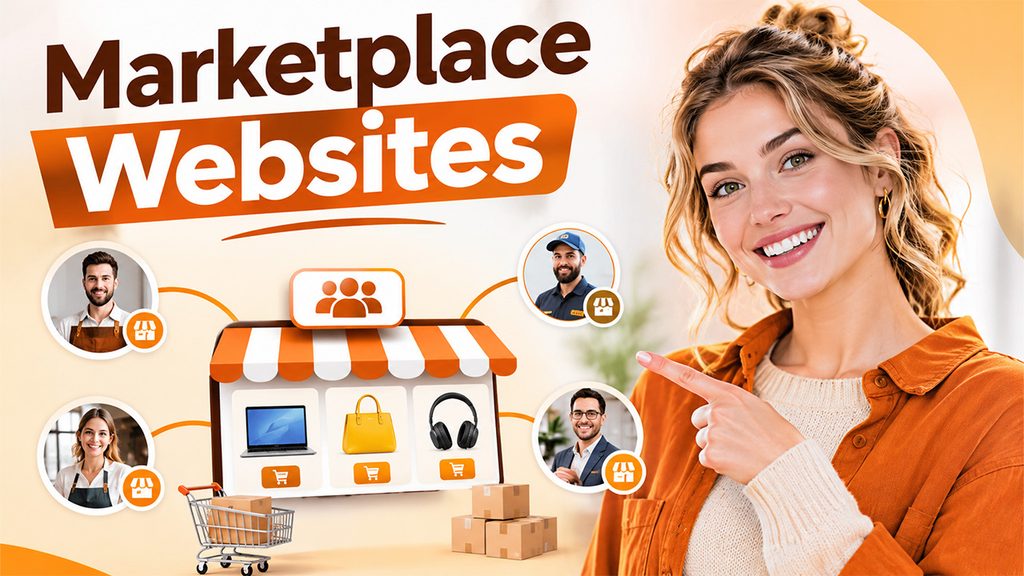
Marketplace websites connect buyers and sellers on one platform. Examples include e-commerce marketplaces, freelance platforms, rental platforms, and service marketplaces.
Unlike a standard e-commerce website, a marketplace usually involves multiple sellers. The platform owner provides the infrastructure, while individual sellers list their products or services.
The main goal of these types of websites in a marketplace is to create trust between buyers and sellers. It must support secure payments, clear communication, reviews, dispute resolution, and reliable search.
Marketplaces can be powerful business models, but they require careful planning. The platform must attract both supply and demand to function effectively.
14.Community and Forum Websites
Community websites are built to bring people together around a shared interest, profession, location, or goal. They may include discussion forums, social networks, support groups, and interest-based communities.
The main goal is to encourage interaction, knowledge sharing, and ongoing engagement. Members may ask questions, share experiences, participate in discussions, or access community resources.
A successful community website needs clear guidelines, moderation tools, user profiles, notifications, and easy ways to discover relevant discussions. As a community grows, many owners decide to switch from Wix to WordPress, because it gives them more control over member features, plugins such as BuddyPress or bbPress, and long-term scalability.
Community websites can create strong loyalty because users return not only for content but also for connection.
15.Web Portals
Web portals are secure online platforms that bring together information, tools, and services for a specific group of users. Examples include employee portals, student portals, patient portals, and customer portals.
The main goal of a portal is to give users a centralized place to access relevant information and complete tasks. A patient portal may allow users to view test results, book appointments, and communicate with healthcare providers. An employee portal may provide payroll information, company policies, and internal tools.
Portals require strong security, role-based access, and a simple user experience. Different users should only see information relevant to their role.
16.SaaS Product Websites
Software as a Service, or SaaS, websites promote cloud-based software products. They explain what the product does, demonstrate its value, and encourage visitors to sign up for a trial or request a demo.
The main goal of a SaaS website is to convert visitors into users. These types of websites should clearly explain the problem the software solves, highlight key features, show pricing options, and build trust through testimonials, case studies, and security information.
SaaS websites often include interactive product tours, comparison pages, documentation, customer support resources, and integration details.
A strong SaaS website should make it easy for potential customers to understand the product and take the next step.
17.Personal Websites
Personal websites help individuals build an online presence and share information about their work, interests, achievements, or services. They may be used by consultants, freelancers, speakers, authors, job seekers, and public figures.
The main goal of a personal website is to create a professional digital identity. These types of websites may include a biography, resume, portfolio, blog, contact form, social media links, and downloadable resume.
A personal website can help individuals control how they appear in search results and provide a central place for people to learn more about them.
How to Choose the Right Types of Websites
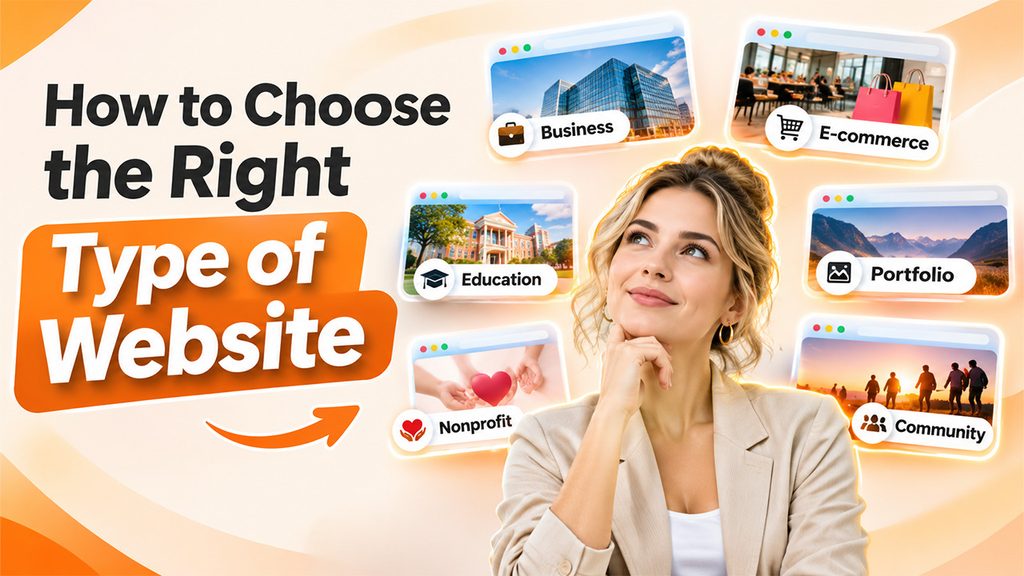
Choosing the right type of website starts with understanding the primary goal. Businesses and organizations should ask what they want visitors to do after landing on the site.
They should consider whether the goal is to generate leads, sell products, build awareness, educate users, collect donations, provide support, or build a community.
It is also important to understand the target audience. Types of websites designed for corporate buyers may require detailed case studies and security information. A website designed for young consumers may prioritize visual storytelling, social proof, and mobile-first design.
The right website type should match both the audience’s needs and the organization’s goals.
Common Features Across Website Types
Although websites serve different purposes, many share common foundational features. These include clear navigation, mobile responsiveness, fast loading speed, search functionality, contact options, security measures, and accessibility support.
Content quality is also important across all types of website. Visitors should be able to understand the purpose of the website quickly and find the information they need without confusion.
Strong calls to action are equally important. Whether the goal is to make a purchase, book an appointment, donate, download a resource, or contact a business, the next step should be clear.
The Importance of User Experience
No matter what types of websites a business builds, user experience plays a major role in success. A website should be easy to navigate, visually clear, fast, and accessible on all devices.
Users should not need to guess where to find information or how to complete a task. Clear headings, logical page structure, readable content, and visible calls to action improve usability.
User experience also affects trust. A poorly designed website can make even a legitimate business appear unreliable. A clean, professional, and well-organized website helps visitors feel confident.
Matching Types of Website with Business Goals
Every website should support a measurable business or organizational goal. A business website may measure lead form submissions. An e-commerce website may measure sales and conversion rates. A nonprofit website may measure donations and volunteer signups. A blog may measure traffic, engagement, and newsletter subscriptions.
When website goals are measurable, businesses can improve performance over time. They can identify which pages attract visitors, which calls to action perform best, and where users drop off.
This data-driven approach helps organizations make better decisions about content, design, and functionality.
Conclusion
Not every website is built to sell. Websites serve many purposes, from generating leads and sharing knowledge to building communities, supporting causes, and simplifying everyday tasks.
Understanding the different types of websites helps businesses and organizations choose the right digital foundation. A business website builds credibility and generates leads. An e-commerce website supports online sales. A portfolio showcases work. A blog educates and engages audiences. A charitable trust website builds awareness and encourages support. A booking website simplifies scheduling. A membership website delivers ongoing value.
The most successful websites are those that clearly define their purpose, understand their audience, and guide visitors toward a meaningful action. When design, content, and functionality align with the website’s goal, businesses and organizations can create digital experiences that deliver real value.