

 Share on media


Building a functional, responsive website no longer requires months of complex coding and expensive development cycles. Today, incorporating AI tools during the website creation phase reduces initial production time by an average of 70 percent compared to traditional workflows. However, launching a lightning-fast, automated WordPress site is only the first phase of digital success. To achieve sustainable visibility, businesses must combine automation with local SEO strategies in WordPress that help them compete in highly targeted regional search markets.
Once a new site goes live, it immediately faces the challenge of competing in densely saturated, hyper-localized search ecosystems. Thailand, for example, operates as an overwhelmingly mobile-first market where 70 percent of all internet search queries occur on smartphones. Ranking in these highly competitive regional markets requires nuanced, market-specific tactics that go beyond a simple platform launch. After an instant site deployment, many growing businesses leverage specialized SEO services in Bangkok to establish immediate local authority and strategically outrank established competitors in the area.
The Technical Foundation of Automated Sites
Before any website can hope to dominate local search results, it must establish a flawless technical baseline. Modern AI site builders inherently produce cleaner semantic HTML and smaller security surface areas than older legacy setups bloated with unnecessary plugins. This clean architecture frequently achieves exceptional Core Web Vitals scores right out of the box. Google has fully transitioned to Interaction to Next Paint as its primary metric for measuring webpage interactivity, strictly requiring sites to respond to user inputs in under 200 milliseconds. Passing these vital speed tests functions as a crucial tie-breaker ranking signal for websites competing in highly populated local markets where content quality is often relatively equal. Ensuring your infrastructure handles this load efficiently is a pivotal first step.
A technically sound website serves as the mandatory prerequisite for advanced regional rankings. Understanding how to build and maintain this technical baseline is essential for any modern webmaster. You can learn more about configuring these essential settings in this detailed guide on powerful SEO optimisation strategies for 2026, which explores the evolving role of structured content, technical performance, and accessibility. Platforms like WP-1Click handle these crucial technical optimization steps automatically during the build process. This allows site owners to bypass backend troubleshooting and immediately shift their focus toward local user intent and targeted regional marketing.
Bridging the Gap Between Speed and Local Relevancy

With Google commanding over 97 percent of the search engine market share in Thailand as of 2025, localizing your newly generated WordPress site for this specific platform is absolutely non-negotiable. Mobile search queries containing local modifiers have surged significantly among Bangkok consumers in recent years. More importantly, a vast majority of these mobile searchers visit a physical business location within 24 hours of their query. A large portion of those searches subsequently result in a direct, immediate purchase. This behavior highlights the immense value of aligning your automated website with hyper-local search intent. This is where local SEO strategies in WordPress become essential, helping businesses align their websites with local search intent and improve visibility among nearby customers.
To capture this high-intent mobile traffic after deploying an automated website, you must intentionally integrate local signals directly into your digital workflow. Key steps to localize your online presence include:
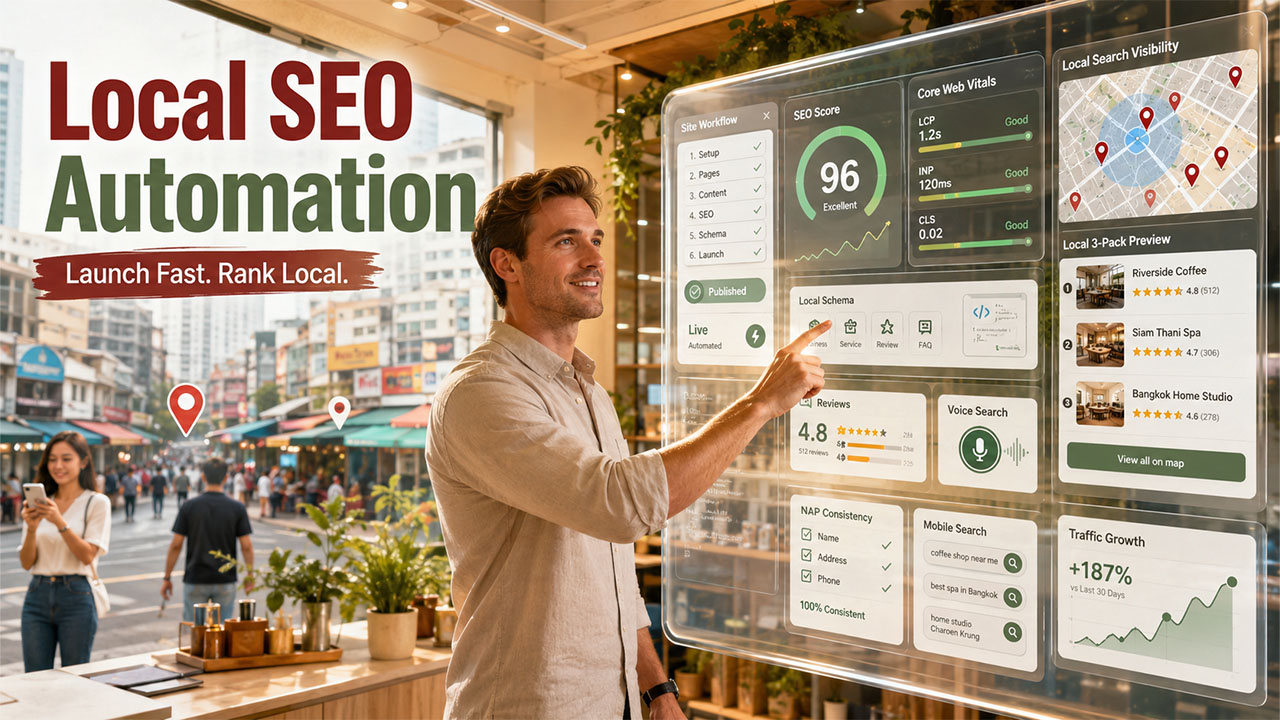
- Implementing local business schema markup to help search engine crawlers precisely understand your physical location, service areas, and operating hours.
- Ensuring your name, address, and phone number details remain perfectly consistent across your website footers, contact pages, and external directory listings.
- Optimizing conversational content for voice search, a technology currently utilized by nearly 38 percent of Thai smartphone users to find localized information.
- Targeting the highly coveted Google Local 3-Pack, as local business listings that secure these premium spots generate significantly more traffic than competitors ranked further down the page.
The Real Financial Impact of Local Reputation
A fast website paired with foundational local SEO makes for a strong start, but genuine user engagement and community reputation ultimately drive local conversions. Search engines heavily weigh third-party feedback when determining which local businesses to display for regional queries. The financial stakes of this localized visibility are substantial for any growing enterprise. According to Search Engine Journal, a prominent Harvard Business Review study demonstrated that a one-star improvement in a local review rating yields a 5 to 9 percent increase in overall revenue. This data proves that technical speed combined with community trust forms the ultimate competitive advantage.
Automating your WordPress deployment provides a massive, measurable head start in today’s fast-paced digital landscape. It secures the rapid load times, mobile responsiveness, and clean code required to pass strict search engine performance evaluations. However, speed alone will not win local markets. By pairing this technological advantage with a highly targeted, region-specific local search strategy, business owners can seamlessly transform a brand-new automated website into a highly visible, revenue-generating asset in their local community.
Conclusion
Launching an automated WordPress website can dramatically reduce development time. Additionally, it provides a strong technical foundation. However, the long-term impact comes when you implement effective local SEO strategies in WordPress that connect businesses with customers in their target markets.
To compete effectively in local markets, businesses must align their websites with local search intent, optimize for mobile users, maintain accurate business information, and build a strong online reputation. Local SEO helps bridge the gap between a technically optimized website and the customers actively searching for nearby products and services. When automation and local SEO work together, businesses can create a digital presence that not only ranks well in search results but also drives meaningful traffic, engagement, and revenue growth.