

 Continue with Google

 Share on media
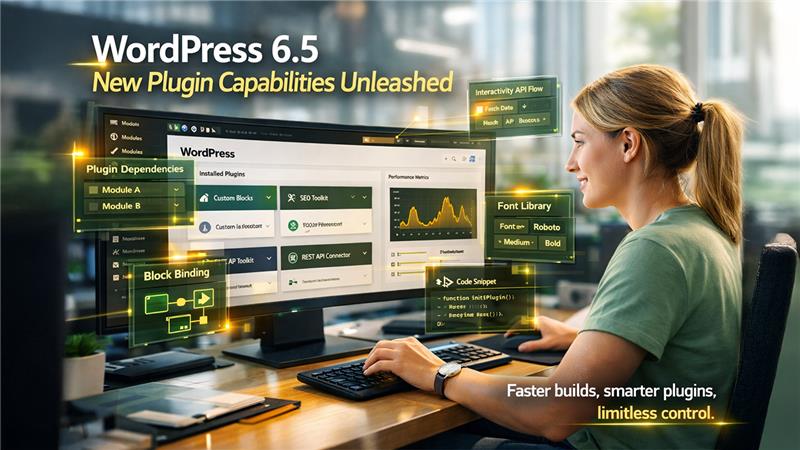
Bored using the old and slower version of WordPress, which includes fewer features? Try WordPress 6.5, with new plugin capabilities and enhanced performance.
WordPress 6.5, which is also codenamed “Regina”, is a new version of WordPress that was released in April 2024. The version features various advanced and improved capabilities, like the introduction of the native Font Library, improved Pattern Overrides, and enhanced Site Editor. The 6.5 version of WordPress also features new plugin capabilities, like Interactivity API, HTML API, and Block Binding API, among others, which change plugin interactions with core platforms.
The blog also digs deep into the working, benefits, and limitations of WordPress 6.5, along with offering in detail analysis of different capabilities of the newer version.
What Is Meant by WordPress 6.5?
Released in April 2024, WordPress 6.5, nicknamed “Regina“, is among the major updates in WordPress, which focuses on enhancing design flexibility, along with site performance and enhanced user experience. WordPress 6.5 introduced various key capabilities, like Enhanced Revision, Plugin Dependencies, and Font Library, among others. WordPress 6.5 delivers a significant performance boost, which includes about 2 times faster editor loading and about 5 times faster typing.
Alongside the major workflow improvements, WordPress 6.5 also enhances site customization, as it features a refined drag-and-drop feature, along with block shadow controls, and better revision history. The improvements result in a faster and more intuitive experience, along with a highly flexible editing environment for the developers.
What Is WordPress 6.5 New Plugin Capability?

WordPress 6.5 introduces various key technical and plugin capabilities. These capabilities fundamentally change the interaction of the plugins with the core platforms. These updates also manage their own requirements.
Here are a few WordPress 6.5 new plugin capabilities:
Official Plugin Dependencies:
With the new update, the developers of the plugin can now formally declare the header of their main plugin file as “Requires Plugins”. The plugin dependencies capability includes three major parts, which include:
- Consistent Installation: Under this, clear links to install and activate a plugin’s required dependencies are presented to the user.
- Safety Guards: WordPress also prevents the activation of a dependent plugin if the plugin is missing its dependencies.
- Deactivation Prevention: In the update, a dependency plugin cannot be deactivated or deleted if the plugins that depend on it are still active.
Interactivity API:
The interactivity API is a new standardized framework for developers of API to create interactive frontend experiences, like instant search, without full page reloads. The interactivity API capability includes standardized coding, cross-block communication, and performance, unlike the latest versions, which hook deeply into the editor, like WordPress 6.9 broke the Slider Revolution plugin.
- Standardized Coding: It offers a uniform way to add interaction, along with reducing the need for different JavaScript libraries.
- Cross-Block Communication: With the cross-block communication features, the interactive blocks can talk to each other seamlessly. In this, a button in one block can instantly update a separate block.
- Performance: The scripts of any block are only loaded on the frontend if the specific interactive block is actually present on the page.
Block Binding API:
The block binding API capability allows the core blocks to display dynamic data from the custom fields. It displays without the need to build any custom blocks from scratch. The block binding API includes two main types of capabilities, which are as follows:
- Direct Connections: With this capability, developers can bind specific block attributes, like an image’s URL, to metadata that is stored everywhere.
- Extensibility: The block binding API supports post meta, where developers can register custom data sources to feed information into blocks.
Script Modules API:
The script module API introduces native support for JavaScript Modules, which helps in enabling cleaner script organization. Script modules API also helps enable modern development practices within plugins. Some of the key capabilities of the script module API are as follows:
- Native ESM Support: With the script module API, developers can register and enqueue JavaScript files as modules.
- Dependency Management: With the script module API, the modules can specify dependencies that can be automatically tracked and enqueued.
- Performance Optimization: The script module API executes the modules only if the page has finished parsing. WordPress also uses preloading for static dependencies, which allows browsers to fetch them in parallel.
Enhanced HTML API:
WordPress 6.5 offers enhanced capabilities to the HTML API, in which the tag processors are transformed from a simple tag-only parser to a more comprehensive document processor. The enhanced HTML API features three main capabilities, which include:
- Comprehensive Token Scanning: The Tag Processor of WordPress was updated to scan every token in an HTML document, which includes doctype, comments, and text nodes.
- Modifiable Text: With the HTML API, the developer can safely read and modify text contents between the tags, without breaking the structure of the document.
- Expanded HTML Processor: The Tag Processor can also recognize most HTML elements.
What Are Some Other Capabilities of WordPress 6.5?
WordPress 6.5 “Regina” features various key capabilities over its previous versions. The new update enhances design flexibility, along with improving site performance and user experience. WordPress 6.5 includes key features like Font Library, Pattern Overrides, and AVIF Image Support. The version also includes over 100 performance updates, making the block editor faster and more responsive. It also improves the drag-and-drop capability, along with offering the Interactivity API for a dynamic front-end experience.
Some of the key capabilities of WordPress 6.5 are as follows:
- Font Library & Management: WordPress 6.5 offers easy installation, deletion, and activation of fonts directly within the site editor, which also includes Google Fonts. These updates allow local font management without relying on third-party theme support.
- Pattern Overrides: With WordPress 6.5, users can easily modify the contents, like texts or images, within a synchronized pattern. The modification can be made without altering the base design pattern, which enables customized content and consistent styling.
- Enhanced Site Editor: The new update of WordPress, which is version 6.5, also offers key updates for the site editor and design. The new update supports box shadows for more blocks, along with the capability to rename blocks in the list view. It also includes detailed revisions, along with enhanced visual cues and drag-and-drop features.
- Performance Improvement: WordPress 6.5 also features native support for the AVIF image format, which provides better compression and improved speed. The new update also includes over 20 performance improvements that enhance the loading speed of the website.
Benefits of WordPress 6.5
WordPress 6.5 offers enhanced customizations, along with better revision history and advanced site editor improvements, enhancing the site performance and user experience. Some of the key benefits of WordPress 6.5 includes:
- Performance improvements: WordPress 6.5 update features about 110 performance updates, which are aimed at delivering faster loading times, along with 5 times faster typing processing and significant reduction in pattern loading times.
- Font Library: WordPress 6.5 features an improved Font Library that can easily manage typography by installing, activating, and uploading custom fonts directly within the editor.
- Interactivity API: The version of WordPress enables the creators to build interactive front-end experiences without reloading the pages.
- Accessibility & Security: The version also features over 60 accessibility updates, along with several security improvements and enhanced block editor security.
Limitations of WordPress 6.5
WordPress 6.5 features key performance and plugin improvements, but also features key limitations, generally in comparison to the new and more improved versions of WordPress. Some of the key limitations of WordPress 6.5 include:
- Dependency Management: The new plugin dependency systems do not support version management. The features also do not allow “Must-Use” plugins as dependencies.
- Font Manager: The new Font Library is only available for block-based themes. For the users who rely on classic themes, do not have access to these features.
- Security Vulnerability: The 6.5 version of WordPress is also prone to vulnerabilities, which include cross-site scripting, along with directory traversal.
- Multisite AVIF Issues: The 6.5 version of WordPress introduced AVIF image support, but the features fail to perform across all the sites in a WordPress multisite network.
Conclusion
WordPress 6.5 is the major update of the platform, which focuses on enhancing the site’s performance, along with design flexibility and user experience. WordPress 6.5 features key capabilities compared to the previous versions, which include the introduction of the native Font Library, AVIF support, plugin capability, and enhanced site editor & design tools. Some of the key WordPress 6.5 new plugin capabilities include Plugin Dependencies, Interactivity API, HTML API, and Block Binding API, which help in offering improved plugin management and empowering developers.
%201.png)

%201.png)

%201.png)