
 Continue with Google

 Share on media

Choosing an SEO tool can make all the difference between a website that languishes in the Google depths and one that steadily climbs up. There has been an ongoing debate regarding which of the three leaders: Moz, SEMrush, and Ahrefs provides the most value. Each SEO platform has its strengths and weaknesses that make for an interesting comparison.
This comprehensive Moz vs SEMrush vs Ahrefs breakdown explores the unique capabilities of each platform. It discusses the similarities and differences between all three tools. It also explains when you might want to use each one. Altogether, it aims to make your choice a little bit easier.
Why Use an SEO Tool at All?
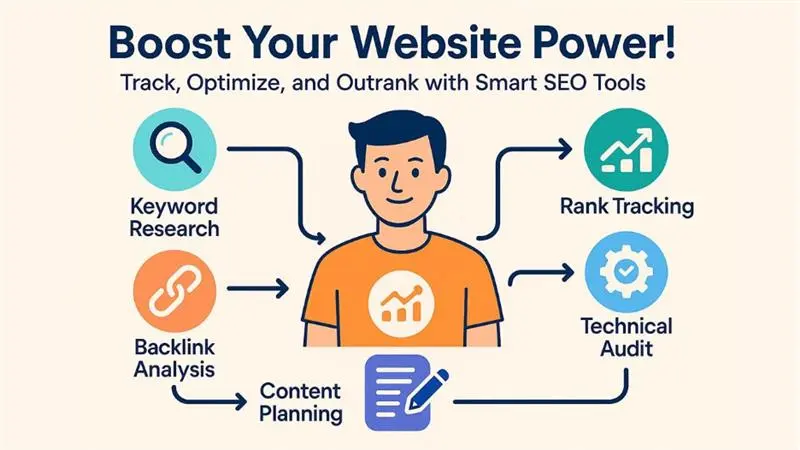
Before we dive into the comparison, here’s a quick reminder of why tools like Moz, SEMrush, or Ahrefs would be beneficial to a website owner or marketer:
- Keep track of search engine rankings: SEO tools allow you to easily see where your site stands for the target keyword(s).
- Keyword research & idea generation: All three platforms provide an effective way to find new keywords, search volume, and identify opportunities for optimization.
- Backlink tracking & competitive analysis: Find out who links to you or your competitors and identify new opportunities to acquire links.
- Technical SEO audits and on-page optimization analysis: Find and fix your site’s crawl errors, slow page-load times, missing content, and look for ways to optimize.
- Content planning and content promotion assistance: Most of the platforms have some content planning tools built-in (i.e., content research, writing assistants, and suggestions for optimizing your content for SEO).
All three tools offer these features in their own unique ways. If you’re running a WordPress site, combining these SEO platforms with comprehensive WordPress analytics can give you a complete picture of both your search performance and user behavior on your site. So, choosing which is best for you depends on what your specific needs are.
Detailed Comparison: Moz vs SEMrush vs Ahrefs
Moz
Moz is one of the oldest and most established SEO tools around. It is known for making SEO accessible particularly to beginners and small / medium-sized websites. Its tools are relatively simple, offer keyword research, site audits, rank tracking, and backlink analysis, wrapped in a user-friendly interface. With this simplicity and clarity, many small businesses or individuals starting with SEO find Moz an appealing starting point.
Key Features:
Moz provides core SEO functionality suitable for small to medium websites:
- The keyword explorer: allows users to perform keyword research and analysis. Moz provides users with search volume and keyword difficulty, as well as suggested relevant keywords, and estimates of organic click through rates.
- The link explorer: allows users to conduct backlink analysis and view metrics related to backlinks. Users can see total inbound links, linking domains, Domain Authority/Page Authority (DA/PA) scores. It also includes a spam score to help identify backlinks that may be harmful.
- Site audits and on-page SEO checks: users can identify basic technical and on-page SEO issues including crawlability, duplicate content, redirecting, and more.
- Rank tracking: allows users to keep track of their keywords’ performance across the globe and locally, SERP features, and view trend charts over time.
- Beginner-friendly interface: almost anyone can use the easy to navigate user interface of Moz, and it is much recommended for those new to SEO.
Now that you’ve seen what Moz offers, let’s take a closer look at its key strengths and where it may fall short.
| Pros | Cons |
| Beginner-friendly and easy to use | Smaller backlink database than SEMrush & Ahrefs |
| Covers all core SEO needs (keywords, audits, links, rank tracking) | Limited for large sites and advanced SEO campaigns |
| Affordable for small businesses and bloggers | Slower data freshness and updates |
| Simple interface without data overload | Lacks strong content marketing tools, PPC & integrations |
SEMrush
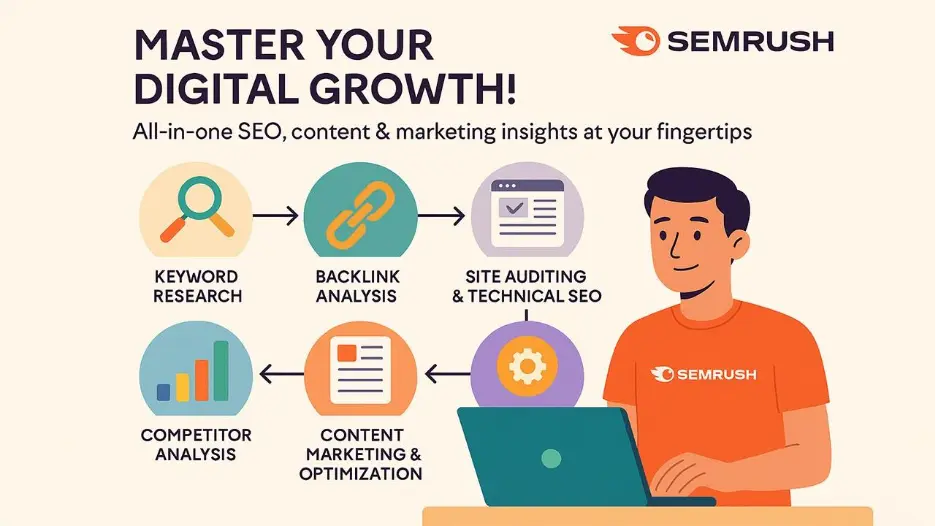
SEMrush functions as more than just an effective tool for optimizing search engines. It functions as an entire digital marketing platform supporting all types of digital marketing, including content marketing, growth intelligence, technical SEO audit project management systems, paid advertising, and social media campaign management. This allows large businesses and agencies with multiple online digital campaigns to effectively use these tools in conjunction with each other.
Key Features:
SEMrush offers a broad, comprehensive toolkit:
- Advanced keyword research: including global and local databases, CPC and trend data, search intent classification, and filtering by match type (broad, phrase, questions, etc.). It is useful for both SEO and paid campaigns.
- Backlink analysis and audit: including detection of toxic links, referring domains, anchor-text distribution, and tools helpful for link building and outreach.
- Full site auditing and technical SEO checks: comprehensive audits that cover crawlability, mobile-friendliness, site speed, security/HTTPS, and more. SEMrush also provides prioritized issue reports, making it easier to address the most critical problems first.
- Content marketing & content-optimization tools: content analysis, topic research, SEO writing assistants, content templates, and integration with other content workflows help optimize on-page SEO.
- Competitor analysis & competitive intelligence: letting you see what keywords competitors rank for (organic & paid), their top-performing content, and their traffic sources. It is useful for shaping your own SEO / content / marketing strategies.
- Rank tracking, local SEO, reporting & collaboration tools: daily updates, ability to track multiple domains/projects, schedule audits/reports, white-label reports, multiple user accounts and project sharing.
After reviewing SEMrush’s wide set of features, it’s time to weigh its biggest strengths against a few drawbacks. Its feature list is impressive, but every tool has two sides. Here are the pros and cons of SEMrush.
| Pros | Cons |
| All-in-one digital marketing suite (SEO, PPC, content, social) | Steep learning curve for beginners |
| Powerful keyword research with intent, CPC & trends | Expensive for small websites and solo bloggers |
| Strong technical SEO audits with prioritized issues | Many features may go unused by pure SEO users |
| Excellent competitor research (organic + paid) | Some data is estimated, not always exact |
| Robust reporting, team collaboration & white-label reports | Can feel overwhelming due to tool breadth |
Ahrefs
Ahrefs is also known to be an extremely robust and data-driven SEO solution. It offers backlink analysis, competitor research, and full-scale auditing of sites using search engines. It has gained popularity among those working in the SEO field who must provide their clients with extensive backlink analysis, in-depth link data, and competitive insights for marketing content.
Key Features:
Ahrefs is particularly strong in backlink-related intelligence and detailed SEO analysis:
- Extensive backlink database and backlink analytics: Ahrefs offers a large, constantly updated index of backlinks, referring domains, anchor-text distribution, and historical link data (new/lost links, growth over time, etc.). This is extremely helpful for link-building campaigns and competitor backlink audits.
- Keyword research & traffic potential analysis: large keyword database (global and regional), keyword difficulty, click metrics, and traffic estimates. Good for international SEO efforts and content planning.
- Content-gap and competitor content research: you can analyze top-performing content in your niche, see which content gets most backlinks or traffic, identify content gaps based on what competitors cover to plan your content strategy.
- Site audit & technical SEO checks: while not as exhaustive as SEMrush’s audit, Ahrefs still offers site-crawling to detect issues like broken links, slow pages, redirects, internal linking problems, and site structure issues.
- Rank tracking and historical data: the ability to track keywords over time, monitor ranking changes across devices/locations, and view historical trends (useful to evaluate the impact of SEO efforts).
With its core features in mind, here’s a quick look at what Ahrefs does best—and where it may feel limiting.
| Pros | Cons |
| Industry-leading backlink database with frequent updates | Limited PPC, social & broader marketing tools |
| Excellent competitor and content-gap analysis | Subscription cost can be high for large projects |
| Strong keyword research with global coverage | Technical audit not as deep as SEMrush |
| Reliable rank tracking with historical trend data | Interface can overwhelm beginners |
| Ideal for link-building and organic growth strategies | Advanced limits depend heavily on plan |
Now that we’ve covered the pros and cons of each tool, it’s easier to see how they stack up against one another. The table below compares their core features and starting prices side by side to help you quickly choose the right fit in the Moz vs SEMrush vs Ahrefs debate.
Comparison: Moz vs SEMrush vs Ahrefs — Features & Pricing
| Tool | What You Get (features / limits) | Best For/ Ideal Use-Case | Pricing Plan |
| Moz | Keyword research, site audits, rank tracking, backlink metrics, small-site crawl limits, MozBar, DA/PA scores. | Beginners, Small blogs, Start-up websites | Starts at $49/month |
| SEMrush | Full SEO suite, competitor research, site audits, keyword tracking, PPC & content tools, large reporting limits. | Businesses, Agencies, Multi-channel marketers | Starts at $139.95/month |
| Ahrefs | Powerful backlink database, keyword research, content analysis, site audit, rank tracking, competitor insights. | SEO pros, Link builders, Niche site owners | Starts at $129/month |
Who Should Pick What — Based on Your Needs
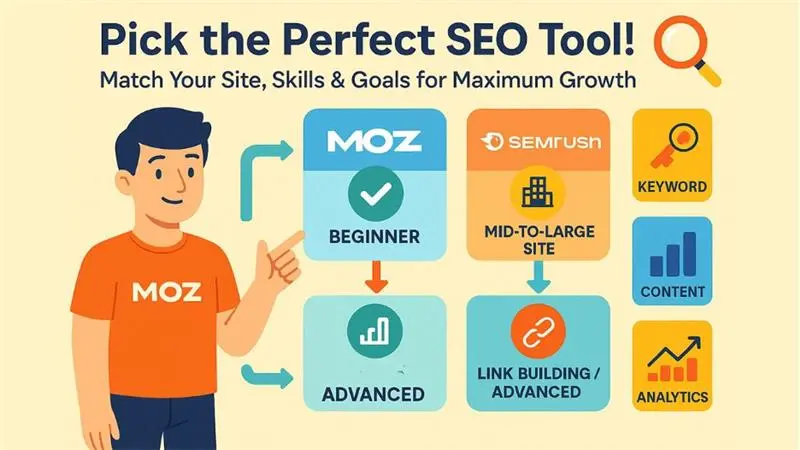
Every website is different, and so are its SEO goals. This section breaks down which tool makes the most sense depending on your experience level, site size, and marketing focus.
- If you’re just starting out and managing a small website or blog, Moz is a great place to begin. It’s ideal for basic keyword research and on-page SEO. You can also learn core SEO fundamentals using its easy-to-access tools. Its beginner-friendly interface includes all the essential features you need.
- If you manage a mid-to-large website or handle multiple domains, SEMrush is likely your best choice. It’s also ideal if you run both organic and paid campaigns. It offers a complete online marketing toolkit. This includes SEO, Ads, social media, and more, along with broad strategy insights.
- If you’re focused on link building, competitor analysis, and backlink profiles, Ahrefs is a strong option. It’s also great for driving organic growth through content and backlinks. If you’re already comfortable with SEO, Ahrefs will suit you well. It provides deeper and more detailed data.
Real-World Use Cases: When Each Tool Shines
Features look great on paper, but real impact is shown in practical use. Here’s how Moz, SEMrush, and Ahrefs perform in real-world SEO scenarios.
- Small personal blog or niche site → Moz: choose 3-10 keywords to track; resolve any basic SEO Issues. use on-page optimization methods and then build gradually.
- Full-fledged content site or business with marketing needs → SEMrush: for content planning, keyword tracking, running ads, monitoring social media engagement, and optimizing technical SEO.
- SEO agency, link-building campaign, or competitive niche site → Ahrefs: for evaluation of competitor backlinks, identify content gaps, running a stronger link-building campaign, and for determining link quality.
Final Thoughts
When comparing Moz vs SEMrush vs Ahrefs, there is no single winner. The right tool depends on your current needs. This includes ease of use, the number of features, and the level of detail you require. If you want a complete online marketing toolkit, SEMrush is a strong choice. Ahrefs stands out for backlink data and keyword research. Moz, on the other hand, offers an easy learning curve for beginners while covering all the essential aspects of SEO.
In summary, there is no best choice, only the one that meets your workflow goals and objectives. If possible, use the free version or free trial to determine which interface feels natural to you.
Regardless of the selection that is made, what is of utmost importance is how the insights obtained through these tools are used. By applying thoughtful tactics with consistent efforts, the insights revealed by these tools will contribute much more to achieving success in search engine optimization than the tool itself.
FAQs
1. Which is better: Moz vs SEMrush vs Ahrefs?
There’s no single best tool for everyone. Moz is best for beginners; SEMrush suits full-scale marketing needs, and Ahrefs is ideal for backlink and competitor research.
2. Is Ahrefs better than SEMrush for backlinks?
Yes, Ahrefs is widely considered stronger for backlink analysis due to its larger and frequently updated link index.
3. Can beginners use SEMrush or Ahrefs easily?
Beginners can use them, but both have a learning curve. Moz is generally the easiest starting point for new users.
4. Do these tools offer free trials?
Moz and SEMrush usually offer limited free trials or free versions. Ahrefs offers limited access through its Webmaster Tools.
5. Are SEO tools worth the cost for small websites?
Yes, even for small sites, the right SEO tool can save time, improve rankings, and help grow traffic when used strategically.
%201.png)

%201.png)

%201.png)