

 Continue with Google

 Share on media
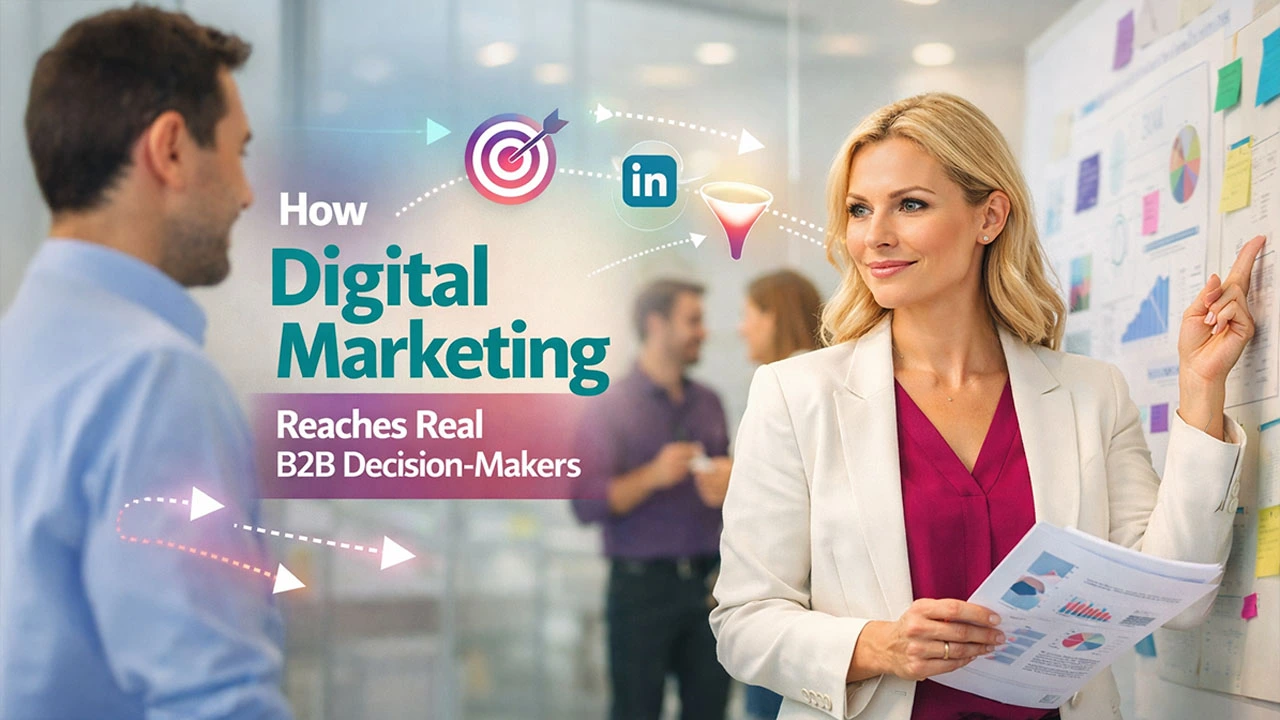
Access to the right decision-makers is possibly the biggest problem that B2B companies are facing in the strategic business environment today. Your product may be excellent, and your pitch may be strong, yet it will not make an impact unless it reaches the decision makers who approve purchases.
In case your outreach is still ending in the inboxes of middle-management employees, while CEOs, CIOs, directors, and department heads remain untouched, you are probably one step behind the competitors who are already holding talks with the real decision-makers.
Digital marketing is exactly at this point where the game changes.
Today’s B2B landscape is crowded and more competitive than ever. A typical B2B purchase now involves 6–10 decision-makers, and each of them is being targeted by 100+ vendors at the same time. Generic campaigns get ignored instantly. While you might still be engaging the mid-level manager with your offer, your competitor could be in the final stages of the deal with the CFO.
Through precision, AI-powered tools, and insights, digital marketing is a way that companies can use to cut through the noise and reach the people who are of the greatest importance; however, this can only be accomplished if you have the right foundation.
Who Are B2B Decision-Makers?
B2B decision-makers are the people or teams who make key business choices. They approve budgets, select vendors, allocate resources, and guide projects. Their decisions determine whether your product or service moves forward.
Some common decision-makers include
- CEOs and Founders
- CIOs and CTOs
- CMOs and Marketing Directors
- Procurement Heads
- Department Managers
Therefore, it’s important to understand what drives their choices and what makes your offering stand out.
Why Is It So Hard to Reach B2B Decision-Makers Today?
Executives are more overwhelmed than ever. A CEO may receive over 200+emails daily, which means generic outreach rarely gets noticed
Here are four major challenges:
- Message saturation and digital fatigue
- Difficulty building trust and proving ROI
- Long, non-linear buying cycles
- Traditional channels lack precise targeting
That’s the reason why hyper-personalized and digitally driven strategies are now essential.
Digital Marketing Channels That Effectively Target Decision-Makers

Digital marketing channels help you reach the right decision makers and engage them effectively. These strategies help you reach the right decision makers and start meaningful conversations
1. Content Marketing Builds Trust and Authority
Marketing quality content builds trust. Decision-makers prioritize value-driven and authentic content rather than generic content. You can also learn how to start a blog to share valuable insights and attract the right audience.
Quality content formats that work best include:
- Case studies
- Whitepapers
- Industry reports
- Blog posts
- Comparison guides
Trust is the foundation for any B2B decision-making and access to accurate, insightful, and expert content leads to fostering trust.
2. LinkedIn Enables Precision Targeting
Target professionals like C-level executives or managing directors on their social networking sites like LinkedIn.
You can reach executives based on:
- Job title
- Industry
- Company size
- Seniority
- Years of experience
LinkedIn allows you to find the right professionals and start genuine conversations with the people who make decisions.
3. Account-Based Marketing (ABM) Helps You Personalize at Scale
Account-Based Marketing lets you tailor messages for each company and share content that matters most to the people likely to engage
ABM strategies include:
- Personalized landing pages
- Custom messaging for each account
- Account-level ads
- Coordinated email sequences
- Deep engagement tracking
This approach increases relevance and boosts conversion rates significantly.
4. SEO Captures Decision-Makers When They Search
Many executives look for answers on Google before they ever talk to a sales team. If your pages don’t appear when they search, they may pass over your company without even knowing it exists.
Effective SEO tactics include:
Here are a few simple ways to improve visibility:
- Focus on keywords people use when they are close to making a decision
- Write groups of pages that explain a problem in depth
- Make sure your site loads fast and is easy to navigate through
- Prepare your content so it works well on voice search tools
When your pages appear for the searches that matter, the right people can find you know that they are exploring options
5. Email Marketing Builds Strong, Long-Term Relationships
Even with new marketing trends, email is still one of the most effective ways to reach decision-makers.
Try these simple approaches:
- Organize your email lists by role
- Send messages that address specific challenges
- Use automated workflows to follow up without being pushy
- Track engagement to see who is interested
Executives respond best to emails that are useful and relevant rather than broad, generic messages
6. Webinars Offer Value-Driven Learning Environment
Decision-makers focus on a value-driven approach like webinars and events over a sales pitch. These platforms help decision-makers focus and understand better without any overly promotional. In general, webinars have a higher potential to capture qualified leads and typically sign up instantly.
Successful webinars:
- Showcase real-world use cases
- Build authority
- Offer interactive Q&A sessions
These sessions attract high-intent prospects and generate highly qualified leads.
7. Retargeting Keeps Your Brand Top of Mind
Retargeting helps your brand stay visible to decision makers who visit your website even if they are not ready to act. Retargeting helps to keep the executives in the loop and keep your brand in sight.
Retargeting helps you:
- Re-engage interested visitors
- Deliver personalized reminders
- Increase conversions across channels
This approach helps to nurture the leads who showcased any interest and repeat visibility till the targeted audience moves forward with their purchase decisions
Why Data Quality Matters in Decision-Maker Targeting

Reaching the right decision makers requires current and accurate contact information. Verified sources make it easier to connect with the right people. Using reliable data improves outreach and increases the chances of meaningful interactions
High-quality data ensures your messages reach the right person. It reduces wasted effort, helps your team focus on the right prospects, and supports better engagement.
High-quality data ensures:
- Ensures Your Message Reaches the Right Person
Accurate data helps your campaign run efficiently by driving visibility and helps to land in front of real decision-makers
- Reduces Wasted Marketing Spend
Inaccurate data results in an increased number of bounced emails, poor ad impressions, and misaligned outreach. Fresh and updated data make every dollar count
- Improves personalization and relevance
It’s important to know your target audience before curating relevant messages, tailoring content according to their pain points.
- Boosts engagement and response rates
Quality data increases open rates, (CTR) click-through rates, a surge in demo requests and overall engagement.
- Support better lead qualification
With access to reliable data sales and marketing team can easily identify and attract high-value prospects, prioritize leads based on scores, shorten the life of the sales cycle, and close more deals.
- Strengthens sales and marketing alignment
Sales and marketing teams similarly utilize accurate data, which unravels queries associated with both teams. Improves follow-ups and increases conversion efficiency accordingly
- Enhances ROI and conversion rates
Up-to-date data helps to target better, reduces wastages of time and resources and improves the flow in the sales pipeline and ROI.
Data integrity is the backbone for successfully targeting the right decision-makers effectively
To summarize it quality data is the backbone of successfully targeting the right decision-makers.
How Digital Marketing Shortens the B2B Sales Cycle
Companies use digital marketing to move prospects through the sales process more efficiently by focusing on individuals who show clear interest or buying intent.
Digital marketing kicks starts the process of closing a sales cycle through
- Providing relevant information early
- Guiding decision-makers through each stage
- Equipping sales with qualified leads
- Offering consistent educational touchpoints
These factors help in fostering
- Stronger relationships
- Better lead quality
- Higher revenue.
Key Benefits of Targeting the Right Decision-Makers
Email remains a practical way to reach the people who guide business decisions. Executives are more likely to read messages that address real issues they deal with, rather than broad or generic communication
Key benefits-
- Faster sales cycles
- Higher-quality leads
- Stronger trust and deeper relationships
- Increased conversions
- Improved ROI
- More predictable revenue
Common Mistakes That Push Decision-Makers Away
Companies must be very careful of any redirecting and misleading factors or inaccuracies that might not only distract but also change the opinion of the decision-makers, especially if these changes are against the interests of their service.
Avoid these mistakes that cause decision-makers to lose interest:
- Using too much technical jargon
- Over-focused on features instead of benefits
- Undefined target audience
- Pushing prospects too quickly
- Weak lead nurturing
- Inconsistent follow-ups
- Ignoring the multiple stakeholders in a buying committee
Best Practices for Reaching Decision-Makers with Digital Marketing
Reaching the right decision-makers, like CEOs or CFOs of a company, effectively requires more than running random ads. Decision-makers look for value-driven and engaging content. That’s the queue for companies to implement digital marketing strategies that combine content, targeting, and analytics to build strong business relationships and drive revenue growth
To consistently influence executives, companies should:
- Maintain strong multi-channel visibility
- Map the buying committee and personalize communication
- Use intent data to identify active researchers
- Publish credible, data-backed content
- Align sales and marketing teams
- Implement ABM for high-value accounts
- Focus on relationships, not quick wins
Conclusion
Reaching the right decision-makers takes time up ample time and resources, but digital marketing helps you to connect professionals with ease. When your content focuses on real business challenges and your ads reach people exploring solutions, it creates meaningful interactions. An easy-to-navigate website and relevant LinkedIn activity give executives reasons to engage. Well-timed emails keep your brand visible without being intrusive. Over time, these touchpoints help decision makers recognize your company and understand the value you provide, and strengthen business relationships naturally
%201.png)

%201.png)

%201.png)