


 Share on media
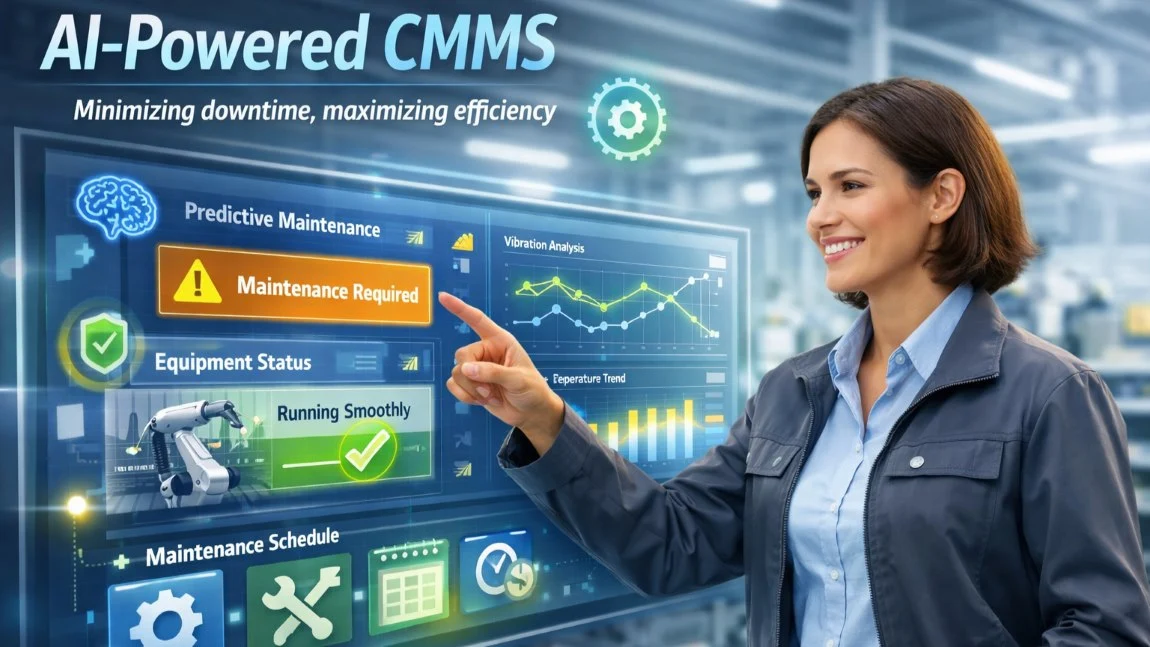


The contemporary busy industrial environment has seen maintenance management as an activity that is now strategic in terms of motivation towards efficiency and profitability, as opposed to being a reactive and expensive activity. No longer faced with the unpredictable nature of equipment failures and increasing repair expenses, maintenance teams are currently pursuing proactive approaches which minimize unexpected downtime and enhance the performance of assets. The core of this change is the emergence of Computerized Maintenance Management Systems (CMMS), and AI-driven systems are on the first column of the list.
The Shift from Reactive to Proactive Maintenance
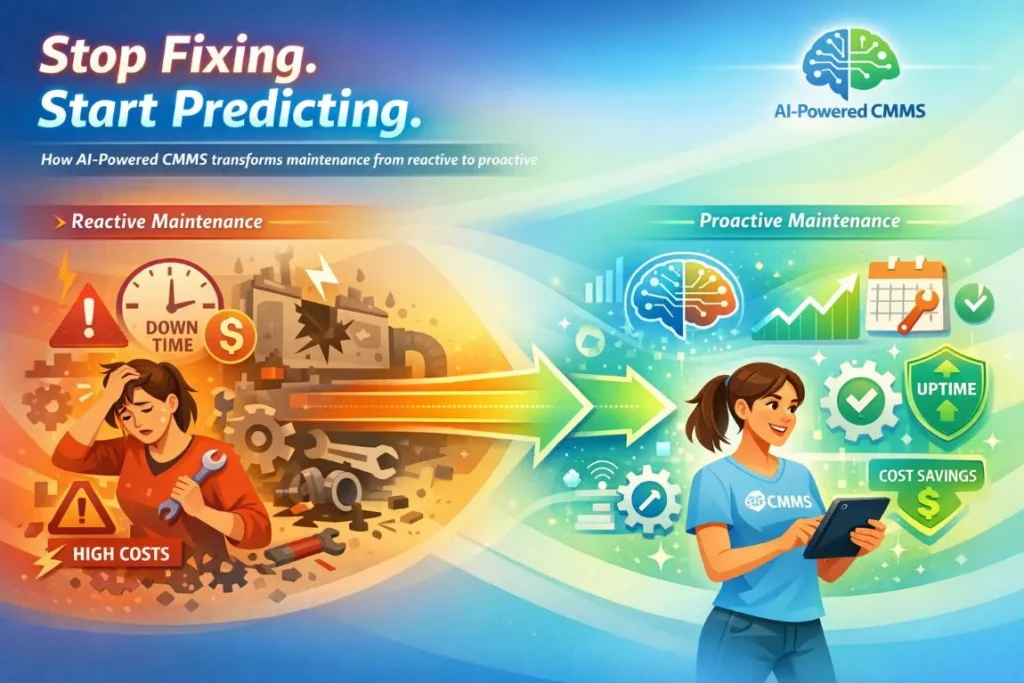
Days have passed when maintenance was taken as a reactive process- addressing the failure of equipment when it arose. This classical model had the tendency of incurring high costs in repair, downtime and even unproductiveness. With the help of technology, the industry is today adapting predictive and proactive maintenance strategies. This change is precipitated by the growing complexity of operations and the necessity to optimize the resources within an increasingly competitive environment.
CMMS solutions based on AI make maintenance staff anticipate when an asset will fail and take preventive measures before it affects business. With the capacity of AI to learn patterns based on past performance and predict upcoming maintenance, these systems can create predictions and schedule optimization as well as real-time information on the condition of the assets and minimize unexpected outages.
Key Challenges in Maintenance Management
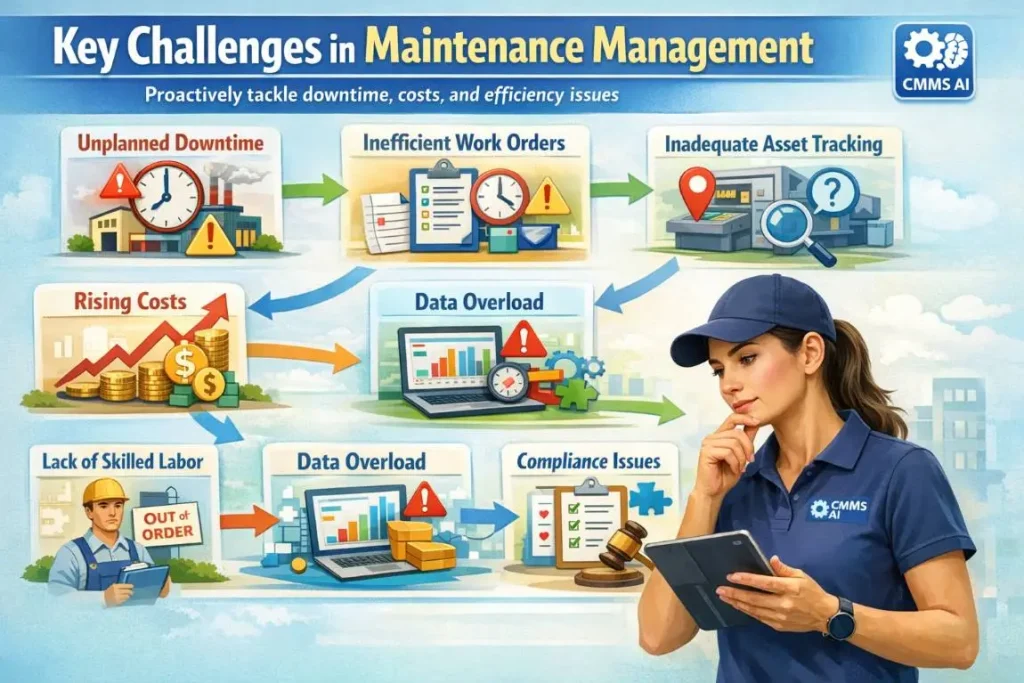
Maintenance management is one of the most critical factors that guarantee the optimum operation and cost reduction in the industry. Nonetheless, maintenance workers and plant managers encounter a number of issues that may affect the proper operation of maintenance practices. The following are the most important problems of maintenance management:
1. Unplanned Downtime
Unplanned downtime is where the equipment suddenly breaks down halting production and making it late. This is among the most expensive and vexing concerns in the maintenance management. Failure to forecast failures results in unplanned repairs, productivity, and deadlines, which cause impact on the entire performance of the business. Such interruptions may be challenging to prevent the lack of proactive maintenance strategies and the absence of sufficient data.
2. Inefficient Work Order Management
It is a universal struggle to manage work orders. Without a centralized system, work orders may slide away, lie in wait or get prioritized incorrectly and hence missed maintenance opportunities and wasted resources. Such messiness leads to idle time, reduced productivity and increased operational expense. Lack of efficiency in work order management further leads to confusion regarding the task assignments and schedules that may make it difficult to track the progress and ensure that some important maintenance tasks are achieved in due time.
3. Inadequate Asset Tracking
To maintain the assets, it is necessary to track the performance and maintenance requirements. Nevertheless, lack of precise data regarding the state of the assets causes them to neglect the maintenance teams to know which assets require attention or those that require maintenance. This invisibility may cause over- or under-maintenance which may cause unnecessary repairs as well as failure which would otherwise have been avoided when it is well monitored. Effective management of assets can be achieved through proper tracking of the right equipment at the right time maximizing efficiency in operations.
4. Rising Maintenance Costs
Maintenance is always increasing in cost especially when it is reactive but not proactive. Costs of emergency repair, spare parts and labor may increase rapidly when the equipment is often failing or not maintained appropriately. The maintenance teams might also find it hard to control the costs when they do not understand the overall effect of their maintenance choices in the long run e.g. would a costly repair have been avoided with a more intelligent plan.
5. Lack of Skilled Labor
With the retirement of the experienced maintenance professionals and the entry of fewer skilled workers into the industry, a workforce has been created with an increased gap. The lack of competent technicians may result in delays during the process of repairs, mistakes in the maintenance operations, and increased costs because less qualified employees can spend more time troubleshooting and fixing the problem. High employee turnover: New staff will require training and knowledge transfer to retain a highly-performing maintenance staff.
6. Data Overload and Lack of Actionable Insights
Some businesses fail to handle data overload because maintenance systems produce enormous amounts of data in the form of equipment sensors, work orders, and maintenance logs. Although the data provides helpful information, it is also very overwhelming to the point of going through it and analyzing it without the right tools. It is common with maintenance teams that are unable to derive actionable information out of this data, and therefore they do not utilize the data to take an opportunity to predictively maintain or to take a cost-saving opportunity.
7. Compliance and Regulatory Challenges
There are strict rules and compliance matters in the other sectors like manufacturing, utilities and healthcare as regards to maintenance activities. Ensuring that maintenance operations are carried out as stipulated by the law and safety requirements can be both time consuming and complex. Failure to comply with the laws can lead to penalties, legal mishaps and negative publicity. Effective compliance management is a systematic manner of dealing with records and monitoring of audit, repair and inspection.
8. Integration with Other Systems
The maintenance management frequently entails the cooperation of the departments like the procurement department, the operations department and the management of the inventory. The maintenance management system (CMMS) is not simple to integrate with other enterprise systems including Enterprise Resource Planning (ERP) and inventory management. This is due to the inefficiencies, data silos, and errors caused by a lack of integration between systems and this affects the accuracy of maintenance schedules, budgets and inventory control.
How AI-Powered CMMS Solves These Challenges
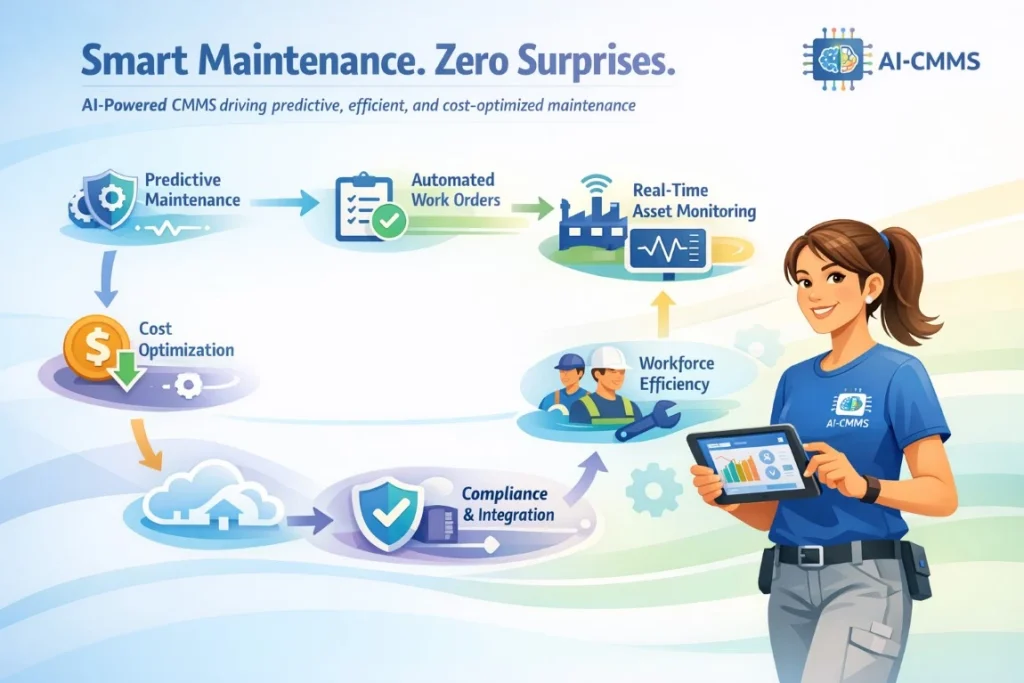
1. Predictive Maintenance
Ai-based CMMS is able to predict potential equipment failures before they occur and to allow the maintenance crews to perform maintenance tasks in advance, rather than reacting to them. By analysing previous data and setting trends, these systems are able to forecast when the assets are likely to malfunction so as to minimise unexpected downtime.
- Predicts failures based on historical trends.
- Schedules maintenance activities before issues arise.
- Reduces emergency repairs and their associated costs.
- Extends asset life by addressing minor issues early.
2. Automated Work Order Management
AI-based CMMS automated the creation of work orders, allocating them, and prioritization of work orders so that tasks can be performed at the correct time, and the resources distributed in the most efficient manner. This automation gets rid of time wastes due to manual tracking and also makes sure that important jobs are not missed.
- Predictive work order generation through automation.
- Give priority to tasks according to urgency to prevent downtimes.
- Minimizes the chances of tasks being left behind or becoming late.
- Improves overall maintenance team productivity.
3. Real-Time Asset Monitoring
CMMS incorporates IoT sensors to enable real-time tracking of asset performance with the help of AI. This enables the maintenance team to be notified instantly of the irregularities and thus they can easily take preventive measures before expensive breakages occur which ensures the consistent and efficient running of the system.
- Track assets in real-time to give real-Time notification.
- Identifies potential failure earlier before it becomes a big problem.
- Gives information on the performance and health of assets.
- Supports data-driven decision-making for maintenance.
4. Cost Optimization
AI-driven CMMS can be used to minimize maintenance expenses by optimality in resource and minimized maintenance downtime and over-maintenance. Accurate forecasts of the timing of maintenance mean that businesses can save on doing repairs that do not need to be done, reduce operation costs and increase ROI.
- Minimizes unwarranted repairs through the scheduled execution of maintenance.
- Automates inventory and minimizes waste of spare parts.
- Reduces labor expenses through workforce effectiveness.
- Reduces maintenance budget in general because it prevents expensive downtime.
5. Enhanced Workforce Efficiency
CMMS systems enhance the efficiency of the maintenance workforce, as it ensures the automation of routine work and the introduction of AI-driven insights. This is beneficial in dealing with the issue of labor shortage whereby teams are able to handle more assets using less resources whilst preserving high standards of service.
- Improves the use of data to make decisions.
- Enhances the productivity of the workforce and slows down training.
- Minimizes errors through prescribed maintenance information.
- Reduces errors by providing actionable maintenance data.
6. Data-Driven Insights for Better Decision Making
CMMS based on AI offers maintenance teams with actionable insights derived based on large quantities of data. Such insights assist the business in determining the trends, predicting the future needs and making concrete decisions to streamline the Factors of maintenance and its cost.
- Provides operational information based on real time and historical analysis.
- Presents trends demonstrating inherent problems with assets.
- Enhances decision-making through providing predictions that are data-driven.
- Helps find cost-saving prospects and inefficiencies in operation.
7. Compliance and Regulatory Adherence
CMMS powered by AI makes sure that the maintenance practices are not violating the industry regulations through the automation of audit trail, inspection process, and reporting. It also maintains a comprehensive record of all maintenance operations and this makes it easy to prove conformity whenever there is an audit.
- Automates the process of monitoring regulatory checks and inspections.
- Maintains proper maintenance documentation that is used to audit.
- Minimizes the chances of not adhering to the industry regulations.
- Facilitates reporting and ensures that the regulatory documents are submitted in time.
8. Seamless Integration with Other Systems
The AI-based CMMS systems are meant to be integrated into the other enterprise systems, which could include ERP, CRM, and inventory management tools. This integration assists to get rid of data silos, enhance the effectiveness of workflow, and get every department using the latest information.
- Integrates with ERP, CRM and inventory management systems.
- Facilitates the transfer of data between departments to enhance decision making.
- Lowers the mistakes made in the consolidation of information through a single system.
- Enhances interdepartmental interaction and performance.
Choosing the Right AI-Powered CMMS Solution
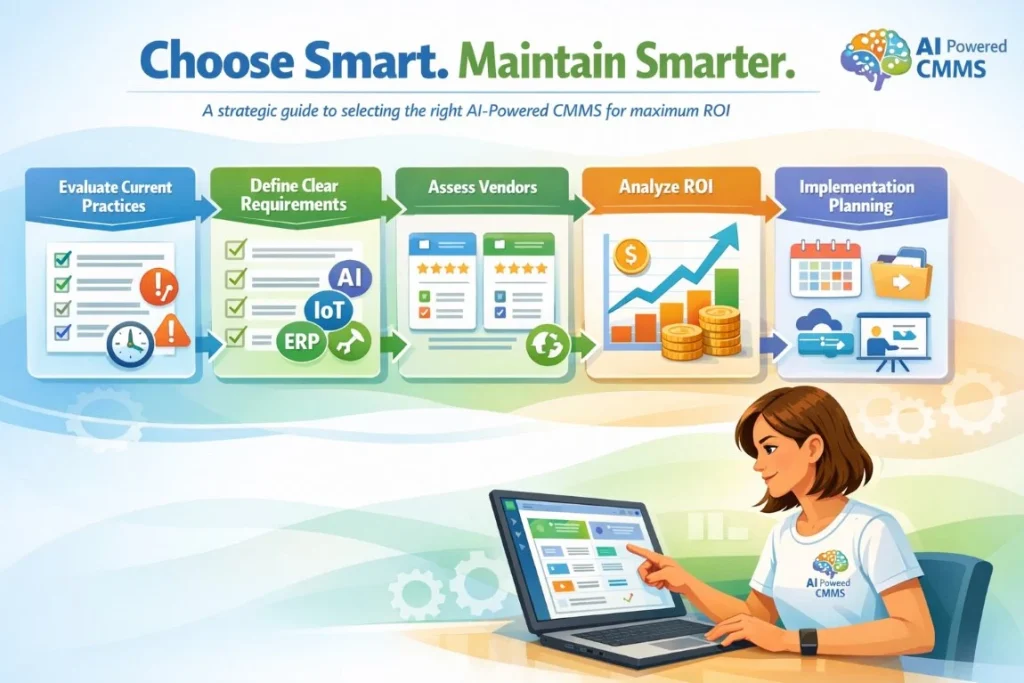
Choosing an appropriate CMMS is very important choice which can have a huge influence on your maintenance operations. The following is a process of how to make the right choice:
- Evaluate Your Current Maintenance Practices: Before reviewing CMMS solutions, you need to have a closer look at your current maintenance practices. What are your pain points? Are your operations being characterized with frequent downtimes, missed work orders, and increasing costs? Knowing your needs will assist in formulating your needs. When selecting an AI-Powered CMMS, businesses must carefully evaluate their current maintenance practices, operational goals, and long-term ROI. Understanding how B2B decision-makers evaluate technology investments can provide valuable insights into prioritizing features, predicting costs, and ensuring a smooth implementation. By learning from proven strategies in the B2B space, companies can make informed choices that reduce downtime, optimize asset performance, and maximize efficiency across the organization.
- Define Clear Requirements: On the basis of your current practices, develop clear requirements of a CMMS. Do you require predictive maintenance requirements? Do you need to integrate the system with other systems like the ERP or IoT sensors? Make sure that your needs are as per your operational goals.
- Assess Vendors: Seek CMMS vendors that are based on AI. Consider the capabilities, flexibility, scalability, and service by each vendor. Be keen on the way the system will be integrated into your current infrastructure and the ease of the interface.
- Look at the ROI: Be sure that the CMMS that you decide on has a definite payback. These would involve less down time, better asset benefits and reduced maintenance expenses. Find case studies or testimonials of other companies in your industry to determine possible benefits.
- Plan of Implementation: When you have chosen a solution, plan how you can implement this solution. This involves data migration, training of your maintenance team and a definite go live schedule. A good roll out is important in order to make sure the system is adopted easily.
Conclusion
The AI-enabled CMMS solutions are transforming the field of maintenance management and give maintenance staff, plant managers, and operations managers the necessary tools to minimise downtimes, to increase asset availability, and to optimise the cost of maintenance. With its adoption of these technologies, firms will be able to reshape its maintenance process, not only to ensure that its operations proceed in a smooth manner but also have a competitive advantage in the market.
After adhering to the steps in this guide, you will be in a position to make a wise choice of CMMS that meets your objectives, budget, and operational requirements. Choosing the complete right solution, much like investing in reliable WordPress Maintenance Services, ensures your team—whether in IT or industrial maintenance—can achieve better performance, greater uptimes, and significant cost savings, leading to long-term success in today’s ever-changing operational landscape.