

 Share on media


Irrespective of whether you are a developer improving your skills or a complete beginner, selecting the right platform to learn how to code makes a considerable difference. Nowadays, there are hundreds of websites available, it can be overwhelming to find out where to start and which platforms deliver results.
Previously, it was a notion that coding is only relevant for software engineers or computer science graduates. If you’re new and wondering whether coding and programming are the same thing, it helps to understand the difference between coding and programming before choosing your platform. Today, professionals across finance, marketing, operations, and design are choosing programming skills to remain competitive in the job market. The demand for coding skills is rapidly rising, and the good news is that paid and free resources to learn how to code have never been more accessible.
In this guide, we will break down the right coding practice websites in 2026, what they offer, who they are suited for best, and how to effectively utilize them to establish real and career-ready skills.
What Is a Coding Practice Website?
A coding practice website is a digital platform that ensures organized programming exercises, challenges and projects to aid users learn how to code through rigorous practice. Such platforms provide support to different programming languages and provide real-time feedback, making them suitable for self-paced learning.
Most platforms can be categorized as the following:
- Challenge-based Websites — Where you can solve algorithmic problems and compete with each other on leaderboards.
- Project-based sites — Where you create real apps in a step-by-step manner.
- Curriculum-based sites — Where organized and detailed courses help you go from beginner-level and advanced-level.
Comprehending such categories enables you to choose a platform that aligns with your goals and learning style.
Best Coding Practice Websites to Learn How to Code in 2026
1. freeCodeCamp :
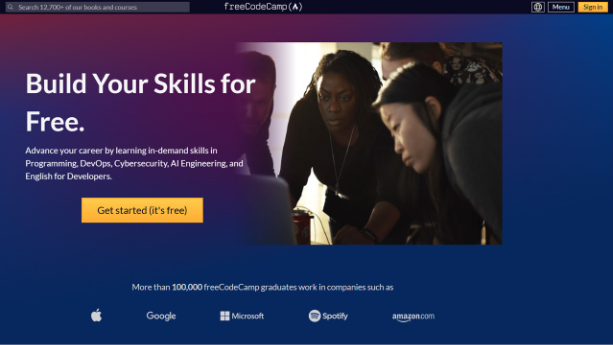
freeCodeCamp is a free and widely popular for anyone who wants to learn how to code from zero. It provides a complete curriculum covering CSS, HTML, Python, JavaScript, and more. It also organizes its lessons around developing real projects instead of isolated exercises, so learners walk away with a comprehensive portfolio of operational apps instead of just completed quizzes, which is specifically valuable for the ones without a formal background in computer science.
Important highlights :
- 3,000+ hours of free coursework.
- Project-driven certifications after completion.
- Active community and forums for developer support.
- No login wall — begin immediately.
- Involves hands-on technical interview preparation and coding projects, providing learners with portfolio-ready evidence of their progress.
2. Codecademy :

Codecademy is well-known for its beginner-friendly, interactive, and browser-driven coding environment. You provide the code and immediately see the results, which makes the initial learning stage less daunting. The platform breaks frameworks and languages into digestible and short modules with in-built checkpoints, which aids learners to measure progress in the form of small victories instead of being overwhelmed by the complete syllabus all at once.
Key highlights :
Organized learning paths by career and language track.
- Instant in-browser feedback.
- Free plan is available; Pro plan unlocks quizzes and projects.
- Courses in Java, Python, JavaScript, SQL, and more.
Provides career paths and skill assessments that directly map to real job titles, enabling learners to keep track of measurable progress over time.
The process of coding org login is simple. Users can sign up, select a learning path, and choose where they left across different sessions.
3. HackerRank :
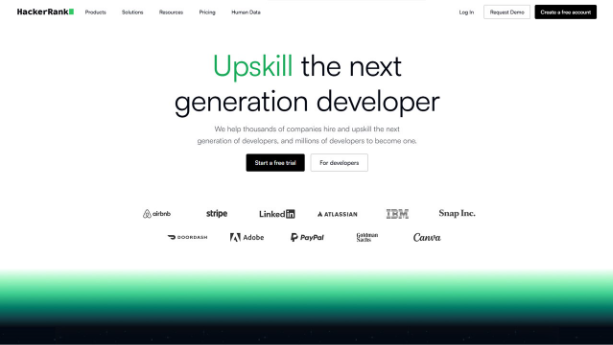
HackerRank is widely utilized for preparing for technical interviews. It sorts out all problems according to the domain including algorithms, structures, SQL, Artificial Intelligence, etc. This makes it simpler to focus on particular weaknesses. Apart from individual practice, a lot of companies leverage HackerRank to screen candidates directly, so being comfortable with its interface and timing format doubles as real interview preparation instead of just abstract problem-solving.
Key highlights :
- Organized problem sets with varying difficulty.
- Challenges specific to the company set by top tech employers.
- Certification badges that you can add to your resume.
- Well-suited for developers who are preparing for job interviews.
Those who have standard skills already and wish to learn how to code at a competitive level will HackerRank specifically valuable.
4. LeetCode :
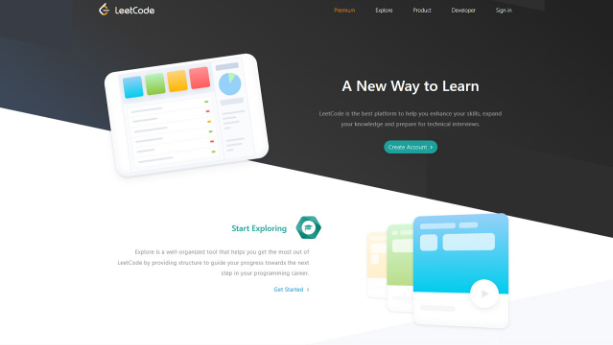
LeetCode is a recommended option for developers that are targeting roles at tech companies at tier 1. It hosts a lot of issues, a lot of which show actual interview questions leveraged at companies like Google, Meta, and Amazon. Since issues are tagged frequently with companies that have asked them, candidates can personalize their preparation for a specific employer instead of generically practicing, which ensures that the platform becomes specifically popular during active interview cycles.
Important highlights :
- Problems categorized by difficulty and topics.
- Mode of mock interview with timed session.
- Threads of discussion for every problem showing peer solutions.
- Premium level problem sets particular to a company.
- Its explore cards segment problems by pattern and data structure, so learners can close skill gaps systematically instead of randomly practicing.
If you want to improve your efficiency of problem-solving, LeetCode turns out to be a preferable choice to learn how to code under actual interview conditions.
5. Codewars :
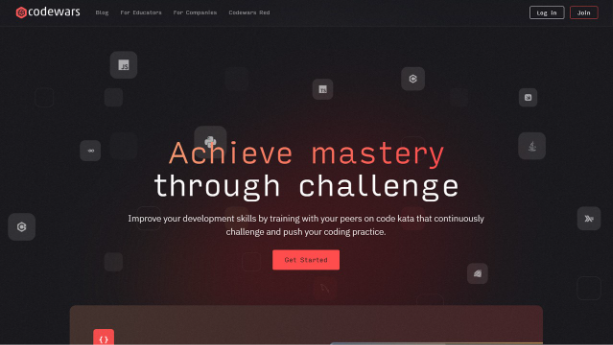
Codewars leverages a gamified system where users solve four progressively harder coding challenges, also known as katas, while earning honor points and ranks as they improve. You can also review how other developers approached a similar problem after completing it, making this an effective way to learn different coding techniques. This rank-and-honor system creates a game-like sense of progression, much like the structured learning experience offered by the Top Coding Bootcamps in 2026, helping learners stay motivated and engaged over time rather than relying on static problem sets.
Important highlights :
- Provides support to more than 50 programming languages.
- Community-based where you can see peer solutions after completion.
- Consistent practice daily encouraged through streaks.
- Go-to choice for thematic coding in particular challenges.
For those who want to combine Codewars-style challenges with comprehensive kata practice, go through our guide on the Best Coding Kata Sites for an in-depth look at platforms created around this method.
6. The Odin Project :
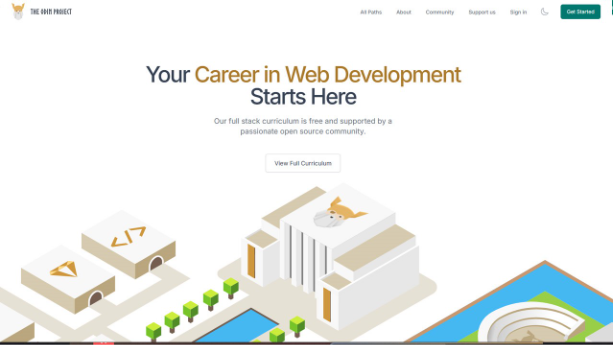
The Odin Project is an open-source and free curriculum for full-stack web development. It takes a project-oriented approach, which means that learners create real applications from day one instead of completing separate exercises. Since the complete curriculum is open-source and community-maintained, it is frequently updated to adopt the best tools and practices, which keeps the material from feeling outdated the way that a few static courses can.
Key highlights :
- Detailed curriculum covering different programming languages such as CSS, HTML, JavaScript, Node.js, and Ruby.
- No cost. Absolutely free.
- Strong Discord-based community.
- Custom built for self-motivated learners.
- Combines every project with hand-picked external resources, so learners are not stuck without a next step when they face up against a wall.
It is a highly popular platform to learn how to code if your end-goal is web development, and your objective is development over drilling.
7. GeeksforGeeks Practice :
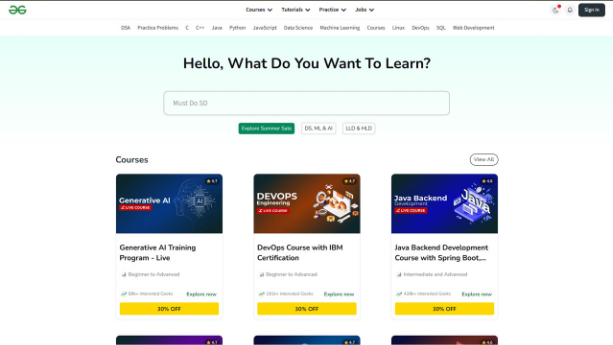
GeeksforGeeks integrates editorial content with a separate practice session, making it simpler to understand concepts and instantly test them with associated issues. This close combination of application and theory means learners often need to leave the application to search for a concept mid-problem, which reduces the feedback loop between learning something new and applying it actually.
Important highlights :
- Encompasses algorithms, data structures, databases, and system design.
- In-depth editorial explanations for every issue.
- Interview preparation courses and problem sets are also available.
- Free and premium tiers.
This is a dual approach which combines theory with practice that makes it an effective choice for learners following a thematic coding curriculum.
Across all the seven platforms you use, the most common thread you notice is consistency: platforms that integrate organized content with actual practice often ensure the biggest long-term outcomes.
Key Mistakes You Need to Avoid While Practicing Coding
Even when you have access to the best coding practice websites, progress can stall because of avoidable habits. You need to look out for these common mistakes:
- Switching between platforms too often stops you from deeply understanding a single curriculum.
- Relying on copying and pasting the solutions without comprehending the logic behind them. If you want detailed practice that explains you the reason, refer to our list of 45 Best Coding Challenges for Beginners that breaks down the logic behind each solution.
- Emphasizing just the level of difficulty instead of covering concepts. It leaves weak spots in basic topics such as recursion or data structures.
- Skipping to review each problem that can help you figure out opportunities to learn a lot more efficient approach.
- Considering practice as a one-time effort before an interview instead of treating it as a consistent habit.
Free vs Paid Coding Practice Platforms: What You Need to Know?
Most platforms on this list provide a free tier. However, the premium plans typically unlock features that can improve your learning. Before you upgrade, it aids to understand what you are paying for actually:
- Free tiers often encompass basic practice problems, core lessons, and community access, which is sufficient for beginners imbibing foundational skills.
- Premium plans typically include features such as company-specific question sets, mock interviews, skill certifications, and tailored learning paths.
- Job seekers who have a particular deadline, a short-term premium subscription plan on platforms such as HackerRank or LeetCode can be worth the cost.
- For exploratory or long-term learners, sticking with free resources like The Odin Project or freeCodeCamp is often sufficient and combining them with active discussion on Best Coding Forums can give you the much-needed mentorship that free platforms do not provide always.
How You Can Get More Out of These Issues? Key Tips to Follow
Choosing the right solution is only half the job done. Here is how you can maximize your time:
- Begin with one platform and develop consistency before adding more.
- Practice daily — even 30 minutes of daily practices outperform long sessions that happen occasionally.
- Review Solutions of Others after finishing a challenge to learn alternative approaches.
- Monitor progress by recognizing which topics are week and which ones you need to work on most.
- Use coding 4 progressively difficult problems instead of just limiting yourself with the simple ones.
Conclusion
The right way to learn how to code is via organized and consistent practice on platforms that aligns with your objectives. Irrespective of whether you like the gamified Kata format of Codewars, the detailed curriculum of freeCodeCamp, or the interview-based environment of LeetCode, there is a platform well-suited to your learning style. Begin with one platform, follow a routine habit, and layer in additional platforms as your skills evolve. Progress quickly compounds when students practice with intent and focus.
Read also: 12 Best Coding Fonts for Developers in 2026
Frequently Asked Questions
Q1. Which is the right website to learn how to code for starters?
Codecademy and freeCodeCamp are the most beginner-friendly options. Both provide organized learning paths, browser-based coding environment, and free accessibility to core content.
Q2. What is thematic coding in the digital learning platforms context?
Thematic coding refers to sorting lessons and exercises around particular technology themes or subject areas like web development, data structures, or databases, so learners develop knowledge contextually instead of working in isolation.
Q3. What does coding org login mean?
Coding org login refers to the process of user authentication on coding platforms where learners log in to access their saved progress, personal dashboard, and course materials.
Q4. How does coding 4 difficulty levels work on practice platforms?
Most platforms streamline challenges into coding 4 tiers of difficulty, i.e., easy, medium, hard, and expert, enabling users to gradually progress and avoid skipping foundational concepts.
Q5. How much does it take to learn how to code through these websites?
It depends on your goals and consistency. However, with consistent practice daily for 30-60 minutes, most beginners can develop functional programming skills within 3 to 6 months through structured platforms.